Make things better by making better things.
My practice. Riffs about culture, systems, and prajñā. Chop wood. Carry water.
“Don’t run. No one exists on purpose. Nobody belongs anywhere. Everyone is going to die. Come watch T.V.”
— Morty Smith, Rick & Morty
Running from our problems won’t help us solve them.
Often, the people we choose to run away from are the people we should be running closer to.
Problems and the people surrounding them aren’t always the same thing.
When you think about it, most rock bands have one, maybe two guitarists, a vocalist, a bass player, and a drummer. And that has proven to be the winning formula for a long time. Sure, the sound quality has gotten better over the decades. The editing tools, recording studios, and pedals are miles ahead of what The Beatles had when they recorded at Abbey Road.
I think the most interesting benchmark for AI is whether it has created a totally new process for how we approach our work. Meaning, did it create a new instrument? Or are we just continuing to refine the factory (making it faster, cheaper, and with fewer defects)?
For all the innovation, I haven’t seen a new way to email yet. But perhaps that will come. That’s the most interesting work ahead.
The possibilities of transformative new technology are endless.
Often, we focus on the two ends of the spectrum: what can go wrong and what can go right.
But what actually happens is usually something in the middle.
Taking that position, however, won’t get you clicks, and it won’t get you attention.
So perhaps the shift for consumers is to ask: What is this for?
What goes viral in the news is designed to entertain us, which is different from what is actually happening.
I am old enough to remember when the sky was falling over Y2K. This is different, but the pattern of worrying that the world is ending remains the same.
In 1982, Tony Hawk had been moving up the amateur ranks. Apparently, while filling out a registration form for a local contest, Hawk was asked:
Pro or Amateur?
He checked pro.
Stacy Peralta, a legend at the time, saw Hawk check the box. Hawk asked, “Is that okay?”
Peralta replied, “If that’s what you want.”
The rest is history.
No massive contract. No big announcement. No social media back then. But that changed how he approached every decision he made going forward.
Changing the oil in your car is not a one-time event.
And neither is doing your taxes or brushing your teeth.
So why do we treat our inbox, social feeds, and relationships like something we must get done?
Maintenance is a constant in our lives.
LinkedIn is practically unreadable these days. I reposted my blogs over there for a few weeks, trying to be more active. And I couldn’t believe the slop on top of slop being posted.
I shouldn’t be shocked. After all, when “write with AI” tools get crammed down our throats, people are going to use them.
The shocking part is how we choose to spend our time being entertained.
AI maybe too tempting to use for writing AI, but no one forces you to do it. And no one forces you to read it either.
Is posting on LinkedIn really that vital to what you do?
When something goes viral and you are unaware. When a new piece of tech hits the market and you don’t know how to use it. When you haven’t watched the game yet, and someone wants to talk about it. Another notification just went off. It can feel like you are always behind.
Feeling ahead, on the other hand, is fleeting in a world that refuses to slow down. Or perhaps, we don’t know how to.
At some point, AI will consume everything that humans have ever produced on record.
The next question is: What then?
Can it produce its own bit of knowledge?
I’m still really skeptical about how LLMs will achieve AGI. To be clear, I’m not saying it isn’t possible. But predicting the next sequence of a sentence or line of code is vastly different from reasoning.
It isn’t a magic box. But the person wielding it can certainly experience something magical with it.
Emotions are easy to get frustrated with. Especially when we’re talking about the negative ones.
But we rarely stop to ask what their point is.
And while there’s a wide range of answers, the one that fascinates me is this:
Emotions help us make decisions.
Worth thinking through.
The term AI is thrown around so often, and so incorrectly. And it is a reflection of where the conversation is for most.
It isn’t a magic box. It’s a highly sophisticated text prediction system (a large language model) used to guess the answer to the problem you are presenting it with.
The reason it knows your name or can answer a question from yesterday is because of the context you give it.
That’s it in a nutshell.
The “magic box” myth persists because language is highly structured. To predict the next word accurately across a long stretch of text, the model maps out the logical connections, grammar rules, and facts embedded within human writing. It ends up mimicking reasoning quite well, even though under the hood it is just doing incredibly fast, complex math.
Now, how all that works is where it gets really fascinating. There are a lot of great voices out there, but one I keep going back to is Matt Pocock.
Matt Pocock has created the best explanation of how AI works. And also created a fun interactive site to go with it.
Now go learn something.
Youth sports is in a tough spot these days. There is so much pressure on kids to perform and train if they want to even make the high school team.
And it becomes clear: the more competitive the league, the more development the top players get.
Most leagues get it wrong because they are structured for reps to go to the best players. The solution requires a collective effort to have those kids sub out, play positions they are not as comfortable in, or not start and finish every game.
But that comes down to the coach. And more often than not, they want to win too.
Last I checked, there was no shortage of trophies. Just go buy one at the end of the season if it means that much to you.
Sasha Dichter asks three questions:
- What do we never do?
- What can we do?
- What must we do? (each day)
We often can’t tell the difference between what it is we do each day. Soon, everything feels like a must. A result, I suspect, of living in a world where the next email or notification feels like a constant emergency.
But these things are different categories. And when we decide what we are going to do, and perhaps more importantly, what we are not going to do, life becomes clearer about what we must do.
Learning isn’t entertainment.
It can be entertaining.
But typically, it is a slow process of moving from incompetence to competence.
If all the work to become competent is done with a few clicks, what then?
Frederick Taylor used a stopwatch to revolutionize car production and much more. By measuring each person’s output on the line, he dramatically increased how much a company like Ford could produce per hour.
Today, companies track your clicks and your mouse movements to make sure remote workers stay on task.
Now someone out there is trying to figure out how to make AI automate that same work for faster and cheaper.
What a waste.
There are so many more things we can choose to optimize than the stopwatch. What hurts most is how we let that bleed into so many other parts of our lives outside 9 to 5.
Excel can run just about any formula you need, but often we use the same dozen tools.
Speaking of which, there is a new restaurant down the road. You could try it. But it might not be as good as your favorite. So, we stick with what is familiar.
The creature of habit is real. And when something new shows up that is exciting, it’s tempting to fall into the old patterns instead of accessing what you could do differently.
That fear is a liar. It feeds us a narrative about everything wrong with the state of things to preserve ourselves. That’s it. And if we listen to that narration, we will never act, we will never grow, we will never change.
Fear is a signal that danger may be around the corner. Useful for about 5 seconds on the highway. Not so much everywhere else.
Example 1: Apparently, in Europe, playgrounds are built with different design principles in mind.
The focus is less on safety and more on controlled risk. Kids can push themselves further to find the limits of what their bodies can do. A fall has more consequences.
Playgrounds in the US, however, have stricter rules and regulations on what is allowed. And you can’t help but think there is a fear of being sued because someone got hurt.
Of course, from a macro perspective, this isn’t just playgrounds. When design is pushed to make manufacturers less liable, we also teach everyone to look for opportunities to blame someone else for our actions.
It really is a discussion of values and the design choices that come from it.
Example 2: I was at the store the other day and bought Muscle Milk. The wrapper was above the cap, so you had to do this annoying tear-away just to get to the cap, which was also sealed. A water bottle, by contrast, has a simple twist, and you can hear the seal break.
I wondered why this extra step was Muscle Milk’s design choice. Was it because there was some kind of milk scare I was unaware of to show that this isn’t being tampered with? What was the point? What was the feeling they were trying to convey?
The more I thought about it, the more I was convinced that there was no intentional choice. Someone in the packaging department didn’t talk to the marketing department, and that is how it was shipped based on the size/shipping/material matrix to squeeze another cent.
Design really boils down to what we choose to care about.
A lack of design isn’t actually a lack of design. It shows a lack of care.
Freedom and agency are not the same thing.
Freedom is the ability to move. Is contingent on what the state allows. And it can be given, taken away, and limited. It’s based on external circumstances.
Agency, on the other hand, is an internal posture. It lives inside us. It is our ability to choose.
A prisoner can have freedom stripped away, but not their agency.
“The worst thing about being 80 is that you still want to say yes to everything, but the world moves without asking. The old fire in your heart still tells you to do this and that, but your body says we already did it. Also, nothing surprises you. It sounds like a luxury but it’s not, and also you’ve run out of illusions. People treat you like either you’ve solved something or you’ve lost something, and you haven’t. You see life repeating itself everywhere.
The really worst part about being 80 is that you find, at last, you’ve got an understanding of something that might have altered everything in the past, had it come at a time when something could still be altered. When you’re young you think that time moves forward. At 80 you know that it doesn’t; it stands still. We’re the ones that move.”
— Bob Dylan
If we are the ones moving so fast, it would explain why time feels so fast, too. It’s a difficult habit to break. But it is possible to move slower. If time is constant then our preception of it is what changes.
[Sorry about the blog going off the rails this week. Everything should be back in order. On to our regularly scheduled program.]
Waiting for certainty before we act is a recipe for disaster. The time to move will never feel right. (Which is an inevitable feeling when you think about it.)
Instead, we can sit in the tension of uncertainty. In exchange, we get the chance to explore what’s possible.
Sometimes an external force holds us back. Maybe it is a boss, or a parent, or a teacher.
And so we hyperfocus on the idea that if we had more freedom, we could do the things we are most afraid of.
That seems like a perfectly reasonable excuse. “They won’t let me.” But over time, it also becomes a place to hide.
When we focus on our agency, however, we see that the sea of choices is vast; it has nothing to do with the outside world, but with us holding ourselves back.
So what can we do based on the circumstance? Not what we can’t do.
As adults, we have to pay bills, vote, parent our kids, be good citizens, etc.
It becomes a second job on top of the first.
And so, we put away the old jobs we used to do: make art, explore the world, and play. The things we mastered as kids.
We are not above the things kids have mastered. We just forgot to prioritize them.
It’s been six years since the 2020s started.
Or you could say 80 months.
Or 346 weeks.
Or 2,419 days.
Or about 58,000 hours.
The point is perspective.
80 months, for whatever reason, feels like a lot more time than we have had.
The benefit of the doubt changes how we view other people. It is so powerful in how relationships grow and in who or what we decide to trust.
When the picture is fuzzy, I often ask, “Does this person (or organization) still deserve the benefit of the doubt?”
When the answer hasn’t fit in a while, it should internally trigger an evaluation.
(The amount of clarity that comes from flipping the question around is enormous too. Like when a sibling or spouse gets on our nerves—when we are reminded that they deserve the benefit of the doubt, the petty stuff seems less important.)
People can be difficult to work with. Social media has conditioned us to see the worst in them. There is nothing more annoying than people.
And yet…
People bring relationships, connection, and friendship. They create more meaning in our lives.
We can choose to step away from people. Go far enough away, and yes, you will be alone. But when we isolate ourselves, we become less accountable for our actions—there is no one to be accountable to!
We all desire freedom. Freedom from people and the responsibilities that come with them. But without people and responsibilities, total freedom doesn’t create any guardrails for how we conduct ourselves.
Freedom isn’t a place. It is an expression. And the best expression of freedom is play. Play brings us all back together and binds us. And reminds us that people are not so bad.
“Dammit, that yodel of triumph of yours was the most beautiful thing I ever heard in my life. I wish I'd had a tape recorder to take it down.
Those things aren't made to be heard by the people below, says Japhy dead serious.
By God you're right, all those sedentary bums sitting around on pillows hearing the cry of the triumphant mountain smasher, they don't deserve it. But when I looked up and saw you running down that mountain, I suddenly understood everything.”
I think about this a lot in the age of social media and smartphones. Not every moment is meant to be recorded. Sometimes, it lives in our memories. Only our memories. And that’s what makes it so special. Only we get to know.
AI is creating a new level of abstraction. Before AI, we had code; before that, we had binary with 1s and 0s; and before that, we had voltage and punch cards.
In the short run, we are still learning to trust the layers beneath. But sooner or later, the next generation comes along and knows no different.
We can spend an enormous amount of our lives becoming happy.
Once you have the house, the family, the job, the career, the income, the toys, the trips, and so on…we tell ourselves that then we can become happy.
It’s a chase toward a destination.
The alternative is to be happy.
And you don’t need to look hard in our culture of eccentric billionaires to see that money doesn’t produce a state of happiness. That is all a matter of perspective and what you choose to pay attention to.
Will you?
Someone might cure cancer. Someone might change how hospitals bill their patients. Someone might make it more affordable.
But that person probably isn’t you.
Worse, Walmart, Amazon, Uber, McDonald’s, and Marvel movies are already competing in these spheres anyway.
You can’t out Amazon Amazon.
When we say these massive things, though, people will cheer. And when you are asked how it is going, of course you have the baked-in excuse that it is so massive you don’t know where to start.
These big promises are a perfect place to hide.
Instead, build the smallest viable product for the smallest viable audience. It is difficult to build an app that needs 30,000 (or 300 million?) to say this worked. Building an app for one company that is willing to pay, however, is so much more valuable.
Save the big ideas for Shark Tank.
When you make the right architecture bets early, you won’t have to rework on the fly down the road.
At the same time…
We can become so bogged down in these decisions that we forget to build.
My suggestion isn’t to think through all the decisions on Day 1. Instead, just start. Begin. But with architecture decisions in mind as you explore. Begin to uncover those and bake them in as soon as possible.
Bad early bets are where solo projects go to die; don’t make them, but don’t get trapped by them either.
A messy project that works is better than no project at all.
Syntax has become one of my favorite podcasts. Not the easiest to follow when you are first starting out, but it has a wealth of information. Trust the process and go back even a couple of months in their archives to learn how this tech works.
CJ did an incredible video breaking down LLM’s, Open Source, and Open Weights. The subtle differences and why the distinctions matter.
Highly recommended giving it a couple of listens.
Astra, OpenAI’s new advanced model, has solved 10 unsolved math problems.
The question is: Has AI solved math now?
There are two schools of thought here:
While it is clear that the door to new mathematical possibilities is open, the need for more mathematicians is even more important now. What kind of problems can we solve now that we couldn’t before?
And if the job of a mathematician has gone from thinking deeply about problems to autocompletion, well, you’re not going to keep the talent around or create new proteges.
For now, I tend to fall into the camp that if you have imagination and are creative, your work has never been more exciting. The doomers, however, are going to keep finding evidence that things are falling apart.
It’s worth pointing out that six months ago, we were comparing models to Master’s and PHD students. And now? We have proofs AI is producing that are so complicated the foremost experts are having a hard time understanding the answers. Leaving many of us having to take the AI’s word on faith.
What an amazing and weird time to be alive.
We are on the exponential.
Models have become so good that I can’t remember the last time (or heard the last time) someone had an agent hallucinate.
The code also continues to get better. And the question of code quality will soon be forgotten.
So much will be shipped; I am not sure if we will know what good code is.
Six months ago, every post was about what kind of prompts you need, what kind of skills you need, how to structure your workflow, and so on.
Now, the models are so good that you don’t need any of that.
You just need to begin.
So…
Stay off Twitter for advice on these things.
Instead, go build something.
That’s the point. Not to optimize. But to create.
Personally, my setup (which isn’t anything to brag about) is mostly the same from day one. Not because I don’t understand what is out there. It’s because everything keeps changing every few weeks. So, I choose to keep it simple. And focus on the goal.
- There is something to be said about being first.
- Ship before you are ready.
- The goal isn’t to optimize the tools; it’s to make something that creates value.
- What does it look like to invert the model?
- Build for the AI of tomorrow, not today.
- Salesforce is an 800-pound gorilla that everyone tolerates.
- Everyone is looking for shortcuts; look for the long cut.
- Teaching someone else how to use AI is a market that is already saturated.
- Every hundred dollars spent on tokens today is equivalent to thousands of dollars in value. That won’t be the case tomorrow.
- There’s a reason why enterprise software with all the money and resources hasn’t shipped that thing yet.
- Just keep building. Stay curious. Explore. The thing you start building won’t be the product you end up selling.
Your first thought doesn’t have to be your last thought.
Once we accept a role, whether as a student or an employee, for instance, we think our agency simply vanishes within an institution and social norms.
From there, it’s easy to get seduced by someone else’s metrics. Someone else’s priorities. Someone else’s definition of success.
The problem is we imagine someone else doing the things that scare us the most. And so, we fall back and hide in plain sight.
That’s a choice. And if we are stuck in a role that we wish to break out of, start small. Do something daring. Don’t even worry about taking credit. What would that do to change your posture?
The trap today is to keep optimizing. A new tool shows up; you look at your work stack and add a new way to get the work done, with the goal of spending your time on something else.
Sure, if there is a way to use fewer resources, gain time and energy, and save money, by all means. But that isn’t the goal. Tech debt, or intellectual debt, continues to compound when change is rapid.
Spending the time up front to learn the tool may not actually be worth it, especially when the landscape is constantly shifting.
My advice: Ship. Don’t worry about optimizing the work. Instead, get to work. It’s amazing how much clearer it is which tools to grab and which to get better at when you are actually shipping.
With all the questions and worry about what AI will do to work, how it will affect our jobs, or what it does to craft, it’s unclear what it could break.
But what I hope it breaks is the internet.
In so many ways, the internet is just a terrible experience these days. Not when we’re pulling up directions. Not when we’re watching a DIY video on YouTube. Not when we can DM our friend from college. No, it’s the in-between.
It’s when you’re shuffling through an algorithm whose only job is to keep you on the hook.
This is simultaneously the best and worst time to be on the internet. For influencers and rage-bait artists, their time may come to an end soon—hopefully. And for artists and creators, AI has transformed their work in so many positive ways.
…
Not everything needs to be saved.
You can’t improve what you don’t measure.
But you can experience without measuring anything at all.
In fact, when the number is the goal, we’ve lost the plot.
The question is: what are we trying to improve?
Thomas Edison famously said, "I have not failed. I've just found 10,000 ways that won't work."
The important thing to remember in this:
Edison wasn’t trying to make electricity work; he was exploring.
And
Every failed experiment was another data point.
The Odyssey is a spectacular book. It has to be to have survived nearly 3,000 years of history. But it isn’t perfect. In fact, the perfect book doesn’t exist.
There are always ways to improve the structure, refine passages, and make better word choices. You can always polish and improve.
But the goal isn’t to write something perfect. The goal is to get it good enough to solve the problem for the people you seek to serve.
Perhaps the hardest faults we struggle to accept in others are the ones we struggle most to accept in ourselves.
One of life’s great tragedies is watching someone spiral out of control. Like so many things, it happens gradually, then suddenly—by degrees.
There is no easy answer here. No panacea. No one-size-fits-all solution. But one pattern that never ceases to amaze me is the lengths humans go to avoid doing the hard thing. And the hard thing—often the right thing—might only take 10 minutes of courage: one decision we know deep down we need to make, after which the rest of life begins to align, and things become clearer.
A 10-minute discussion with a boss, a coworker, a spouse, or your child might be all that needs to happen.
But we hesitate…
Because we get caught up in the results of these decisions. We have a bad habit of catastrophizing everything around us. As a result, we hope for a miracle, as if waiting long enough might make the answer appear on its own.
No one has a crystal ball. The future is unwritten. Clarity often comes only with the next step, after you’ve chosen the path.
Nostalgia isn’t just the pull to return to the way things were. It’s also a longing to return to the way you were.
As children, we didn’t have to worry about responsibilities, obligations, debts, and whatnot. Someone else took care of those things for us.
So we pine for a world without responsibilities. At the very least, we look for a break from all of this.
Don’t waste your life trying to recover everything that was taken away.
When we learn to let go of our idealized version of things, we can begin to accept reality as it is—not as we wished it were.
Once you’ve accepted your circumstances, you can start building something new.
The hardest lies to see are the ones we tell ourselves. The irony is that others see it more apparent from the outside than we do.
So…
Be truthful about being in our own way.
Stop blaming other people and other circumstances.
If you want to be more truthful, then start telling the truth more. Yes, it is that simple and at the same time, oh so hard.
At the intersection of freedom and responsibility lies dignity.
When we are free to choose how we handle our responsibilities, we can hold our heads high.
Some people are so bored that all they can manage to talk about is:
- “How are things?” “Good. You?”
- Their status—where they stand in the community, how much money they made (or spent).
- Their job. TPS reports. Corporate talk. “Let’s circle back around to that.”
- The weather. “It’s so hot.” “It’s so cold.” And it never seems quite right.
- Gossip. The never-ending stream of viral news, all the way to what the neighbor down the street said.
Like a duck in a pond, there is so much more than meets the eye. We can be more creative about what we have to say.
The problem isn’t that we don’t know what to say; it’s just that thinking takes a lot of effort. And the risk we feel is too great to say something that people don’t expect, and so we go back to what’s expected.
When British mountaineer George Mallory was asked why he wanted to climb Mount Everest, he famously answered, “Because it is there.”
The same can be said of building a tech company out of your garage, going to the moon, sailing the seas, volunteering at the local nonprofit, or playing guitar when it’s obvious you’ll never be selling out stadiums.
“Why do anything?” is a bad question. At this point, it needs to be retired.
Humans are meant to explore. We’re meant to play. There is no why. We do.
The truest, most pure expression of freedom is the freedom to play.
When we play, we are allowed to try things.
When we play, we are allowed to not know.
When we play, we don’t have to be perfect.
When we play, we can be curious, explore, and ask questions.
With so many options of where to travel, what to eat, what to watch, what to listen to, where to work, and who to work for, we need to stop and ask ourselves:
“How do I want to spend my time?”
“What deserves my attention?”
“Who needs me the most?”
When we are clear about those choices, everything else begins to seem more clear.
How does one get a pineapple in Nova Scotia?
“What starts as curiosity about where the food in our supermarket comes from unfolds into many important questions about the dependencies countries have on others: who is vulnerable when food crises hit, who is exposed to export tariffs, and what other countries might be there to fill the gaps?”
It’s difficult to wrap our heads around the modern miracle of excess food. And where does it all go?
It feels like a miracle until you notice the infrastructure built around it. Rome wasn’t built in a day, and neither was this. The pipelines, the infrastructure, and how they interact with economies make us all dependent on each other. It’s taken at least a century of work to put this together.
Take a look at “How does food get traded around the world?” from Our World in Data.
On one hand, you can look at these charts and see how the lines are divided. On the other, you can look past the lines of rival tribes and see a shared enemy: scarcity. Perhaps, “The enemy of my enemy is my friend.”
Communities don’t grow because a neighborhood gets a new stadium or a fancy coworking space. They grow when neighbors bring soup to a sick friend, when someone watches the kids next door so exhausted parents can rest, when a local nonprofit donates food for a school event.
Connection grows through gifts like these. The moment we put a price on every favor, every introduction, every hour of our time, the interaction becomes a simple transaction—pay, receive, move on. Done. No one feels a deeper bond. No one feels a shared obligation to show up again when it really matters.
Without that obligation, communities cease to exist.
There are two kinds of viruses.
The one we are all familiar with is the biological kind. Everyone who has experienced a cold or the flu understands the value of washing their hands.
The second isn’t as obvious. And that is an ideavirus. It’s why people wear distressed, worn-out jeans, get Botox, or eat spicy peppers.
What’s interesting is how an ideavirus spreads.
Before the internet, ideaviruses did spread, but not as quickly or as instantaneously as they do today. Think of the witch trials, tulip mania, and the spread of nationalism. Ideaviruses are ancient.
And it makes me wonder: How can we be less susceptible to these things?
Today, with the use of social media and AI-generated content, a constant stream of exposure isn’t making us less susceptible. But walling ourselves off from technology isn’t the answer either.
I keep coming back to this idea: Are you the customer or are you the product? Perhaps that is a clue to how vulnerable one is.
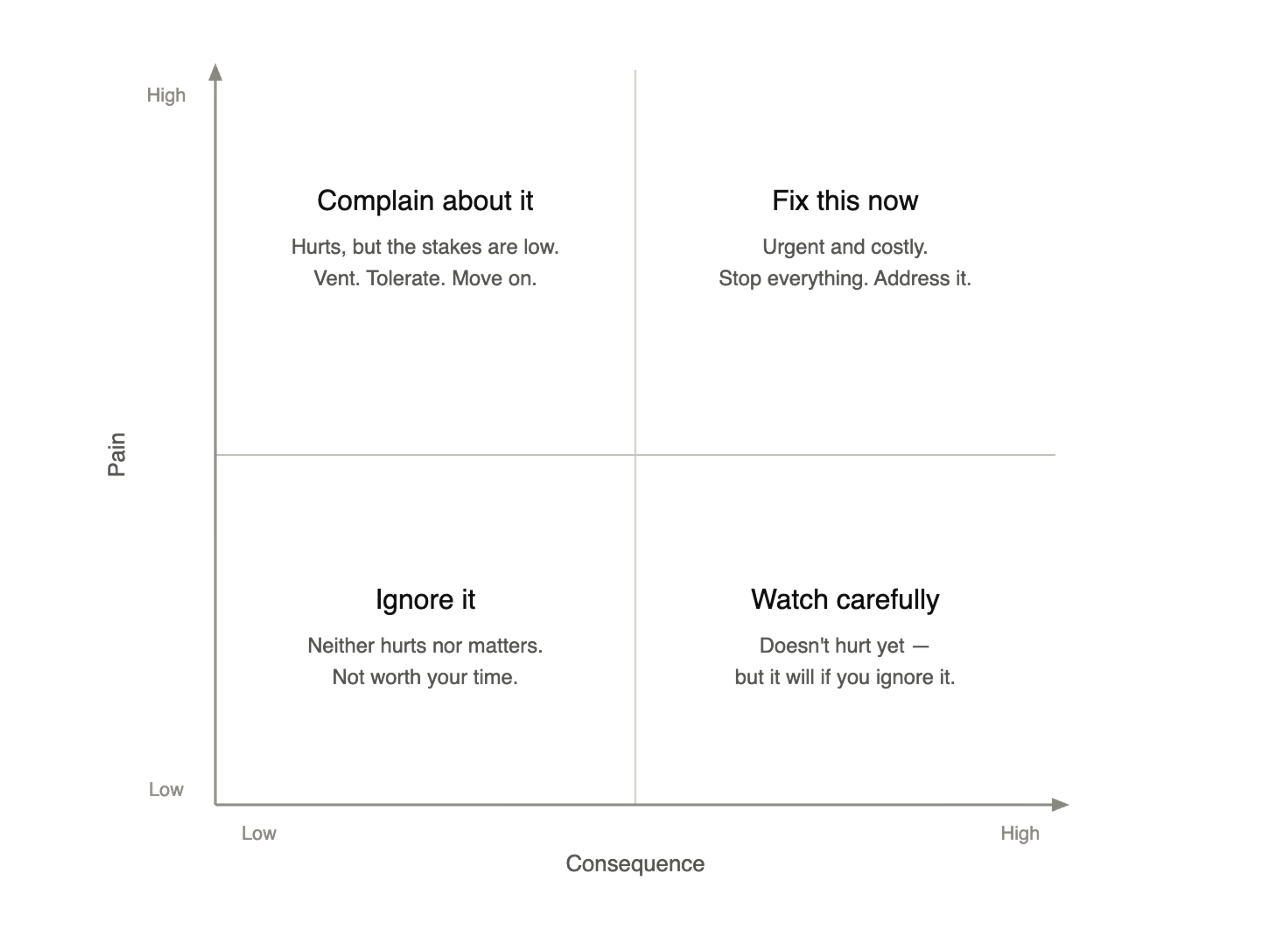
Pain and consequences are not the same thing.
You can have high consequences but not feel the pain. Solo climbing without a rope is high consequence, but if you don’t fall, you won’t feel it.
And you can feel the pain without it being consequential. The first time you lose a parlay on FanDuel might hurt, but the consequences will compound over time if you can’t rein in a growing gambling habit.
Most of the time, we complain about what hurts. Because the discomfort is obvious (to us), and the consequences haven’t stacked high enough to warrant a change.
When behaviors change, mindsets shift.
As our mindset shifts, our beliefs are challenged—chipped away, bit by bit. Until one day, there’s a crack, then a split.
Gradually, then suddenly.
The problem with working with clay is that you can mold it into anything. It doesn’t push back enough to create real constraints.
On the other hand, gravity is indifferent. It’s a constant force we push against our entire lives. A climber on the rock is always fighting that pull.
There’s a metaphor buried in there: we get to decide what to work with. The reality is that if nothing ever pushes back on us, we drift into the path of least resistance.
Demographic diversity is legible—you can count it, you can see it, so it becomes the target to make organizations more diverse.
Over time the count becomes a false proxy that stands in for the actual thing an organization wants to accomplish—because divergent thinking can't be counted.
So diversity isn't just different gender or ethnicity, but humans who truly think in different ways from each other.
Except…
The people who genuinely think differently are the ones who generate friction, and every hiring process tuned for "fit" is built to filter exactly them out.
So the thing organizations say they want most is the thing their machinery is designed to eliminate.
And it isn't only hiring that runs this way. The algo feed sorts you toward the people who already agree with you—engagement tuned for sameness, which is fit by another name. Every day it hands you back who is like you and who isn't, and every day we take it.
Which sparks the question: Are we really becoming more diverse in allowing people/thoughts/ideas come to the table or do we just like saying it?
Noah Smith observed, “15 years ago, the internet was an escape from the real world. Now, the real world is an escape from the internet.”
The internet is about being somewhere else. At some point, we need to come back.
Otherwise, the question of where we want to be and what we want to do is left unanswered.
The never-ending backlog theory says your list of tasks, ideas, or product features will always grow faster than you can execute them. Instead of treating this as a failure, you should instead accept the backlog as effectively infinite and focus on ruthless prioritization, not total completion.
If that’s the reality, it raises a harder question: What’s the point of saving time if you only use it to be more productive?
Happiness rises with reality.
The problem with reality is that it is hard to change.
And so our happiness falls.
Instead of working so hard to change reality, we can focus on changing our expectations.
Think about it.
Burnt bridges aren’t a permanent move.
Two things worth remembering:
- It may take time, but bridges can be rebuilt.
- There is always another (long) way around.
Typical dinner conversation. But it’s telling how entangled jobs and identity have become. We can talk about an unlimited number of topics, but in the end, we fall back on what you do from 9 to 5.
When the answer is, “I’m in a transition period,” something shifts. The person who asked is suddenly running a quick classification and coming up empty. They don’t know what tier you’re on, how to approach your status, what your problems are, or whether you’re a peer.
The follow-up questions reveal everything:
- “Oh, what are you thinking of doing?”
- “How long has that been going on?”
- “That must be exciting.”
Beneath those questions is an assumption worth naming: you are being reassessed and reassigned. Briefly, you are unsortable. In between identities.
Jobs come with identities—titles and numbers that keep score. Nobody sets out to make their job their identity. It happens through accumulated pressure. The job becomes the signal: that you pay your debts, that you contribute to the market, that you are someone.
Lose the job, and you don’t just lose the income (and healthcare, opportunities, maybe even your mortgage). You also lose the thing you were pointing to.
Jobs are a predictable, reliable way to organize our lives. When we lose one, we lose the script. What will tomorrow look like? If no one is paying you to show up, what then?
For the original hackers, a “hack” wasn’t a shortcut. It was a craft.
Members of MIT’s Tech Model Railroad Club used the word hack to describe creative, hands-on tinkering and clever technical pranks. Because computers were technical, rare, and expensive, students who discovered ingenious programming shortcuts or elegant fixes started calling themselves hackers. The emphasis wasn’t on cutting corners; it was on pushing boundaries.
Over time, that meaning warped. Hack drifted from “creative solution to a hard problem” to “trick that helps you avoid the hard work altogether.” Today, our feeds are full of this mindset:
- “Here’s a prompt that I use to help…”
- “This will unlock all these agents that will…”
- “Here’s the hack that all the AI companies don’t want you to know…”
The irony is that we now have something those early hackers could only have dreamed of: an infinitely patient teacher with near-unlimited knowledge at our fingertips.
Yet instead of using that power to explore, experiment, and truly understand, we burn time hunting for one more hack—one more trick that promises to do the work for us.
Maybe it’s time to reclaim the original spirit of hacking.
Stop looking for ways around the work. Start looking for ways into it. Use your tools as a companion in creative, hands-on tinkering. Ask better questions. Run more experiments. Follow your curiosity down rabbit holes.
Because the real “hack” isn’t a secret prompt or a hidden feature. It’s the mindset that turns every problem into an invitation to play, learn, and build.
When your imagination can go anywhere and the opportunity in front of you feels huge, it’s tempting to protect yourself by lowering the stakes. Be realistic. Don’t get your hopes up. We treat unconstrained imagination as the problem.
It isn’t.
The real issue is where we’ve put our satisfaction.
We’ve installed it at the outcome. One good result away from euphoria, one bad result away from collapse. The lottery winner who can’t sit still. The strike of lightning that never comes. When satisfaction lives at the destination, no amount of imagination can protect you from the gap between what you hoped for and what arrived.
That’s why the phrase “lightning in a bottle” is such a trap. We use it to describe flukes and one‑off moments of magic—impossible to repeat, impossible to plan. But its roots are in something very different.
Benjamin Franklin wasn’t chasing a miracle. He stood in a field during a thunderstorm with a kite, a key, and a Leyden jar, not to get lucky, but to understand. The experiment was repeatable. That was the point. What we now call impossible to replicate began as an act of disciplined curiosity.
We kept the image and lost the experiment.
Franklin couldn’t have placed his satisfaction in the capture. You can’t plan to be struck by lightning. You can only build the apparatus, go out into the storm, and pay attention. His satisfaction had to live in the work, in the act of inquiry itself.
We keep aiming for satisfaction at the bottled lightning: the launch that explodes, the career jump, the rare win. And then we wonder why every outcome feels either not enough or short‑lived.
Satisfaction as a foundation is different. It sits in the part you can actually repeat: showing up, building the kite, walking back into the field. From there, imagination stops being something you have to manage or shrink. The storm can be as large as it wants to be; your footing doesn’t change.
A loss hurts more than a gain feels good.
That seems like a simple choice.
Except…
Most people don't choose their anchor—they discover it after the fact, usually when the anxiety is already running.
99% of podcast downloads go to the top 1% of shows. And yet, the dream persists: anyone can start a podcast and get rich. But odds are that “anyone” is not you.
In the era of the “Big Three” TV networks, nobody walked around saying they’d launch a new network. But some did, and now it is too late. The ship sailed.
Today, the door is easier to open, but the math hasn’t changed.
If you want to buy lottery tickets, go ahead. If you want to chase Hollywood, be my guest.
I don’t write this blog to get rich or famous. I write because I want to write. For most of human history, that’s how it worked. You didn’t pick up a guitar for a career—you played because you loved playing.
If you want to start a podcast, start one. Just do it for the right reasons. Not to be a star. Not to make millions. Do it because it matters to you.
The top 1% of money and popularity is crowded. The top 1% of doing something you love, doing something that matters, and making meaning…is still wide open.
"It is advisable to look from the tide pool to the stars, and then back to the tide pool again."
— John Steinbeck, The Log from the Sea of Cortez
We keep looking outward for scale to tell us where we stand, but scale doesn't answer that question. Only the decision does. We are only significant the moment we decide to be.
Rejection isn’t personal.
Rejection is what happens when there’s a mismatch among needs, narratives, and alignment.
The real cost is when we allow a moment of rejection to become a verdict—when you let someone else's mismatch write your next chapter.
The most important part of the newsletter is the letter, not the news.
Everyone already has a distribution channel. Starting one isn’t special.
So what is it for?
A newsletter is not a broadcast; it’s a note to a person. When you treat it like a megaphone, you optimize for reach and lose the reason to write at all. When you treat it like a letter, you write to someone who is already in the room.
It isn’t a way to show your work to everyone. It’s a practice of writing to someone, and most people never make that shift.
Steve Pressfield writes, “There is no worse feeling for a writer or any artist than to see their book, their film, their comedy, their music go out there and die. Or worse, go out into the world and nobody even knows they exist.”
That pain only really lands if the goal is to sell your book, become famous, or go viral. If you're measuring your work in clicks or sales, you're almost guaranteed to be disappointed by what comes back.
The work is the work.
There are many ways to measure success: shipping on time and under budget, trying something new for the first time, the delight on one person’s face, or simply feeling satisfied and proud of crossing the finish line.
Yes, it stings that most people don't know who you are. But that isn't the point when it's time to make something. The point is that you get to make it at all.
Most work disappears. The real question is whether you can make peace with that before you start, not after.
Two roads diverged in a yellow wood,
And sorry I could not travel both
And be one traveler, long I stood
And looked down one as far as I could
To where it bent in the undergrowth;
Then took the other, as just as fair,
And having perhaps the better claim,
Because it was grassy and wanted wear;
Though as for that the passing there
Had worn them really about the same,
And both that morning equally lay
In leaves no step had trodden black.
Oh, I kept the first for another day!
Yet knowing how way leads on to way,
I doubted if I should ever come back.
I shall be telling this with a sigh
Somewhere ages and ages hence:
Two roads diverged in a wood, and I—
I took the one less traveled by,
And that has made all the difference.
— Robert Frost, The Road Not Taken
Everyone understands that life will lead you down these diverging roads, representing the inevitable and often difficult decisions we must make, and you will need to decide what kind of person you want to be.
The “yellow wood,” however, is what strikes me. It actually symbolizes a period of transition. Meaning that the fork in the road happens after you are in a period of transition, not before.
Further, Frost writes, “I shall be telling this with a sigh / somewhere ages and ages hence,” which suggests that he will construct the story of having taken the road less traveled.
The poem is almost self-aware about how we mythologize our choices in retrospect.
We decided the road we took was the right one after, not before.
We narrate choices we were already being pushed toward by a season we were already inside.
If the fork appears during transition, then the question isn't "Which road?" it's "Are you honest about what season you're already in?"
Boris Cherney, the architect of Claude Code, turned some heads this year by announcing that “coding is solved.”
And anyone who has been using these tools can see why. So why haven’t the massive layoffs happened yet?
Arvind Narayanan, Sayash Kapoor, and Simon Willison point out that the coding wasn’t the bottleneck. It’s us.
A developer’s job is more than just coding. It’s writing emails, attending meetings with stakeholders, working with designers, making decisions, using judgment, and more.
AI can go anywhere and do anything, and as a result, often goes nowhere and does nothing without us to point it in a direction.
And while the layoff scare is far from over, there are some signs that we are not on the brink of a massive job apocalypse. (I’ve held the position that it will be somewhere in the middle. Some jobs will be lost. Others created. And most will shift in their duties and responsibilities. Time will tell.)
It is worth noting:
A fast car still needs a fast driver.
and
As Rohan Rajiv reminds us, “(AI) can genuinely optimize many parts of a workflow. But if that workflow isn’t the constraint, optimizing it changes nothing at the outcome level.
We can apologize for our actions. Of course, we all make mistakes. What I find interesting about apologizing is the motive behind it. Is it to make things better, or to make yourself feel better? Are you doing it to make things right, or simply to avoid getting into trouble?
A few pressure points worth examining: who initiated it, what you are willing to change, what you actually said, and whether you feel remorse.
You can tell who the apology was really for by what happens next.
Of course, you're not. No one is.
And yet…
We like to wait for perfection to arrive before we leap.
The perfect pitch deck. The perfect opportunity. The perfect prose. The perfect partner. The perfect firm.
Otherwise, why risk it?
Better, on the other hand, doesn't arrive unannounced. Better requires us to release what is, to find out what could be.
The laws of thermodynamics are clear: we are constantly fighting the pull from order to disorder. The answer is care, maintenance, and a clear understanding of the problem at hand so we can provide the right solution.
But while entropy is real, it's easy to see physical structure decay and easy to overlook the psychological breakdown that happens over time—the wear and tear of the mind. Physical breakdowns happen on their timeline, not ours. That can be frustrating, no question. But we accelerate the decay of the mind when we live in a space of “Why me? Why now?”
The diagnosis for a leaky roof is easy to identify. Physical breakdown is diagnosable. Psychological breakdown isn't. It is far more difficult to figure out what isn't working inside ourselves. And we can't be so quick to patch something together like a drip coming from the ceiling. There is no quick fix when there is no instruction manual in place.
Verlyn Klinkenborg points out,
“Your job as a writer is to make sentences. Your other jobs include fixing sentences, killing sentences, and arranging sentences. If this is the case—making, fixing, killing, arranging—how can your writing possibly flow? It can’t. Flow is something the reader experiences, not the writer. A writer may write painstakingly, assembling the work slowly, like a mosaic, fitting and refitting sentences and paragraphs over the years. And yet, to the reader, the writing may seem to flow.”
Most of us were never told this. So we sit down to write and wait for inspiration to start flowing—a current that carries us forward, with words arriving before we need them. When it doesn’t come, we assume something is wrong with us or with the work. So we stop.
Writers fall into the trap of looking for the reader’s experience while doing the writer’s job. The same is true of a nonprofit board, which doesn’t get the same joy as the participant experience. Your plumber doesn’t fix your pipes because it feels transcendent. They do it because they’re professionals, and the work is the work.
That joy someone experiences in the work we do comes later, and we are not entitled to be part of it. And if we’re stuck in the hard part of the work—when it doesn’t feel fun anymore—that’s not a sign you’re doing it wrong. That’s the job.
A follow-up to yesterday’s post got me thinking: If we don’t decide, who will?
Jeff Jarvis writes,
“It is vital that we — workers, students, academics, creators, citizens — take charge of this new technology and of the discussion about its effects. We must define progress not in terms of the AI boys’ bullshit — AGI (artificial general intelligence), ASI (artificial superintelligence), the end of labor, the colonization of unlivable Mars, a world post-humans — but in human terms: dignified work; shared wealth; the benefits of science, art, and creativity; education for all; equity and justice; and community. It is our future we need to map, a task far too vital to leave to programmers and capitalists.”
I couldn't agree more with this. As cognitive overload and complexity ramp up, it is easy to assume this is someone else's problem. Complexity gives us permission to stay in the analysis loop indefinitely. There's always more to understand, more to wait for, someone more qualified to weigh in. Eventually, the abdication doesn't feel like abdication at all; it feels like due diligence.
What should progress look like? Is it around GDP? Equality? Ending poverty? Justice?
It's clear that the compass points toward technology. At least in this moment, AI could be the thing that solves difficult, interesting problems.
The natural bias is to ask, "What do we get out of this technology?" And we ask it constantly: in boardrooms, in policy hearings, in the endless coverage of every new version release. We measure AI by what it produces, what it replaces, and what it returns. The question seems obvious because we've never been taught to ask anything else.
But that framing has a cost. When we only ask what we get, we stop noticing what technology is doing—on its own terms, in its own direction, whether we're paying attention or not. How is it making life both complex and efficient, both diverse and specialized, and how it is ubiquitous.
(One only needs to look at social media, email, and pdfs/spreadsheets to see.)
Rarely do we stop to ask: "What does technology want?"
Kevin Kelly was the first, I’m aware of, to put it that way, back in 2010. It is more urgent now.
KK argues that technology does not possess conscious desire but rather structural biases. Like how a plant instinctively grows toward light.
As that drift becomes more apparent (tomorrow is today), it can give us a clue on what could happen next as these big questions begin to shake out.
It makes me wonder if this is the moment we look back on and see the biases of technology and humans finally collide. Technology wants complexity. We want meaning. These are not the same thing. So, who is going to mediate the gap?
The fear and optimism around AI often stem from two extreme worldviews.
On one side are the doomsters, who seem to have lost complete faith in humanity. On the other are technological optimists, who believe all of humanity’s problems are on the verge of being solved and that we are entering an unprecedented era of wealth and prosperity.
Both extremes make totalizing predictions that remove responsibility. Both are escapes from the harder middle position: we don’t actually know what will happen next.
People want deterministic outcomes because certainty lets us off the hook. Uncertainty is precisely what compels us to act on the future.
No one has a crystal ball. The question is not whether AI will be good or bad in some final, total sense, but what we choose to do with the range of possibilities in between.
Timing is the hidden variable in whether relationships survive the middle years. Not effort. Not love. Not even compatibility. It’s whether two people happen to emerge from the gauntlet of obligations at the same moment, still facing each other.
So much happens in those years—children, mortgages, careers, debt—so much that pulls us away from the people who need us most. It’s easy to forget what any of it is for.
Even people doing everything right can lose each other to the sheer weight of simultaneous demands.
The bottom line, we can be kinder to ourselves and those around us when things fall apart. No one grows apart on purpose.
Agency is a verb. It's the power to shape our lives.
But if all we're doing is prompting and asking questions, typing into boxes, waiting for answers, never applying any of it to something that actually matters.
We're not using the tools. We're being used by them.
Hands on the keyboard. Nobody at the wheel. Just autocomplete with a pulse.
It's easy to give agency away. Everyone around us is asking for it—the algorithm, the boss, the inbox, the AI waiting for its next prompt.
The harder thing isn't finding it.
It's stopping long enough to notice you had it. And then actually using it.
As we know, change can be frightening. But not in the way we think about it. We worry that the changes we make are not always for the better. We might evolve into something that is unrecognizable.
So perhaps a better framework is to start with the question: What does it mean to change?
There is a change in accumulation. You become more of what you already are. A musician who has played for 20 years has not become someone else; they have deepened their understanding of music and can apply experience and theory together.
There is a change in revelation. You do not become different so much as you become more visible to yourself. The “new” person was latent. This comes with time, life experience, and ultimately applying the wisdom we have learned along the way. "To thine own self be true."
And there is a change as substitution. One value, habit, or identity replaces another. This is the one that triggers the fear: saying goodbye to the old and accepting the new. Or perhaps living with the shame of feeling like we are failing. (After all, you could change again.)
And that is what makes it so difficult to talk about our struggles in our culture. "Not happy with your career? Why don’t you change it then?" If it were easy, of course, it would already have been done. Our culture treats substitution as a simple choice, which makes the difficulty feel like a personal failure.
It's worth pointing out: We’ve often fall into this trap of being afraid of one thing and calling it all things. Which means a lot of the change that has made you who you are, you didn’t even recognize as change.
When we step outside ourselves, we can observe our actions, our thoughts, and our options.
The trouble is that we are quick to defend the image we have built of ourselves. That defense closes us off from opportunities, which then shapes our thoughts and actions.
The ego’s defense works because it is invisible. You do not experience defending the image as defending—you experience it as being right, being threatened, protecting yourself. The defense runs in the dark. So what the witness does is not add a competing force that overpowers the ego. It just turns the light on. And the move cannot fully run once you have seen it as a move. Naming the defense as defense strips its cover, and it loses conviction.
The witness isn’t freedom from the ego, it’s the refusal to be fooled by it.
The eureka moment is not in finding the answer to a problem; it is in understanding why it works.
Eureka moments require a deep understanding of the system around us—something you have to experience and live through before you can even begin to put into words. The answer itself may be easy to find. The real insight comes from sitting with it, observing what’s happening, and noticing why the solution was so easy to miss.
That’s why we shouldn’t rush to implement or fix things. If we want the real eureka, we can stay with the old way for a while and keep the new one in our back pocket. Waiting gives us the chance to see the system more clearly—and to notice what we still don’t understand.
Seth Godin coined the term the Massie Effect, which is the belief that people who care about good causes are the only ones who do.
81% of Utahns are worried about the Great Salt Lake. Four out of five.
So why does caring about it feel so lonely at times? Because almost no one says it out loud—it barely shows up in local races, and no candidate runs on it. The concern is everywhere and audible nowhere. Each of us carries it alone, certain we're the only one.
If I'm the only one who cares, then why even bother?
And that's where the work to create real change goes to die. Until one day we are in a crisis.
The first step is recognition: find the others who care too. And over time, you find another, and then another, until one day the dull sound becomes a roar.
I've made some major updates to Save the Commons. Share it with one person—or ten.
Does AI make our work better, or is it just another trap for our attention?
If it can produce pretty good, mediocre work in an instant, where’s the reward for us?
Simon Willison brings up a great point: It’s never been easier to start something. The harder skill is deciding when a project is done.
That’s the value of a shipping deadline, a budget, or a client who needs it by Tuesday.
We can treat art as art. Paint on a canvas. Or, in this case, code in a terminal. It doesn’t have to be anything more than fun, if you want it to be.
And yet, the pressure to stay ahead and create more will always be there. But like any gold rush, it was never really about the gold.
It’s an important reminder that discipline is a skill, not something we’re born with, but something we can keep getting better at. Deciding which projects to start and when something is finished is part of the craft.
Think about the biggest decisions of your life.
You’ll find that the right decision is rarely the one that feels good in the moment.
The right choice and the comfortable one are rarely the same thing.
Take reggae speakers to the UK, and you get punk rock. The tango was born from Italian and Spanish immigrants packed into conventillos. Banh mi started when the French left Vietnam and the baguette stayed behind.
Culture thrives when we blend two unlikely things together. Put them in a blender and see what happens. And nobody set out to fuse anything—the collision just needed cheap rooms and people pushed into the same ones. So what happens when the doors are closed?
When a city gets too expensive, when healthcare is unaffordable and the cost of living is sky high, we don't just lose entertainment. We lose the conditions. And when the firefighters, the teachers, the barbers can't afford to live in the cities they built, we lose the thing that made those cities worth building.
Anxiety creeps in when we dread what might happen. It is the story we tell ourselves on top of the potential pain.
But it is not enough to say, “Don’t think about the elephant in the room.” If anything, that usually makes the elephant louder.
Maybe the better advice is Tinkerbell’s: think happy thoughts. If you remember the story, that is the only way to fly.
The point is not simply to remove one thought. We need a substitute to fill the void. It does not have to be a happy thought though. It only has to be real enough to hold the space.
"Let's touch base on that."
"Let's take this offline."
"Let's circle back."
Robust systems make it easier to talk about our work than to do our work.
For many of us, creating the drama is more entertaining than the work itself. So we keep finding new things to gossip about.
It makes me wonder if, deep down, we're afraid to finish. If the work is done today, what’s left of us tomorrow?
It’s sticky. It’s loud. It steals our attention and drags us away from the work that actually matters. Worse, that distraction keeps us from doing the very things that would make us calmer.
It feels redundant to keep saying this, but the reminder is necessary: you can’t game the system. The algorithmic internet doesn’t get tired, and it doesn’t stop spamming its way to your eyeballs.
So...
Control what you can control. Curate what comes in. Stop doomscrolling. Don’t spend more than 10 minutes a day on the news.
Because if you’re not the customer, then you’re the product.
"Here you go, Timmy. A book on the history of baseball. It explains how the game is played. And here are all the rules. And there are the stats of all the all-time greats."
Says no one.
If you want to teach a kid how to play baseball, you get a ball and gloves and start playing catch. You don't hand them the policy and procedures manual.
Yet that's the instinct in so much of the work we do. Read the manual, watch the training videos, shadow someone, and then we'll let you get your hands dirty.
With baseball, we just call it practice. At work, however, we treat it as something else entirely.
A sailor once poured wine into the sea before he set off. Not as a story, but as extra insurance. Poseidon was not a character to him—he was the weather, the waves, the difference between returning home and vanishing. That’s what a myth is when it’s alive: not a tale about gods and heroes, but the way the world works, the thing you trust when you step into risk.
We like to think we’ve grown out of that. We point back at the Greeks and their pantheon as if we’re looking at old children’s books. But listen to how we talk about the market, about innovation, about the people who seem to bend the world around them. The tall tales of capitalism, the founders and financiers, the promises these systems make. We don’t call them myths. We call them reality.
We lionize these people. We even worship them. Not with altars and incense, but with attention, deference, a quiet sense that they see something we don’t and live closer to the truth. The American dream, perpetual growth, progress as destiny—these are not so different from the stories about gods and saints we’ve safely shelved. The difference is only that we still live inside them.
Society has always been built on stories like this. The danger isn’t that we have myths; it’s that we forget they’re made. Once a story hardens into “that’s just how the world is,” it stops being something we can choose and starts being something that runs us.
It isn’t the first step that’s hard. It’s looking around and not understanding how to do this.
You act anyway. And that acting is what leaves a path—one others can see, replicate, and adjust.
That’s why going second is a luxury: Now that I’ve seen the path, I can act accordingly.
What is care?
Care, as defined by Webster, is “the provision of what is needed for the health, well-being, and protection of someone or something.”
We can think of all sorts of forms of care.
Healthcare. Childcare. Intensive care. The care of a parent.
What we don’t often think about is the responsibility of care that the state has for prisoners. Of course, no one would ever want to receive that kind of care, because the state operates with a very different definition than what a human being expects.
Care, then, can be so easily abused by those in power, especially those with access to violent levers to pull. That isn’t the real kind of care we know, intuitively, to be true. It’s care as rhetoric, not care as relationship.
Through this lens, care becomes a qualifier in our culture today—something used to sort, separate, and justify.
This is the exact opposite of what care feels like from one human to another.
Because…
Care is the fabric of human connection. It’s the attention we offer freely, the presence we give without needing to control or dominate.
Care isn’t quantifiable, and it is more than simply providing for Maslow’s hierarchy of needs. After all, the state can provide material things—even if many cringe at the thought of getting something for free—and still fail to offer real care.
The most important aspect of care, then, is play: the freedom to play with our bodies, our thoughts, our ideas, our beliefs. The ultimate caregiver is the one who enables these freedoms, creating the conditions for humans to truly thrive.
Freddie: "Now let's see who this really is!"
Villain: "And I would have gotten away with it too, if it weren't for you meddling kids!"
— Scooby Doo
“Robot” was first coined by Karel Čapek in his 1920 play R.U.R. (Rossum’s Universal Robots). The Czech word robota meant forced labor—the work a serf owed a lord. Its root, rab, actually means "slave".
The interesting thing about Čapek's robots is that they weren't mechanical. They were biological—assembled in the chemical sense, not the manufactured one. He wasn't picturing machines. He was picturing us as the manufactured underclass.
The metal came later. Isaac Asimov and the pulp writers shifted the image from flesh to machine, but the word came with it.
The machine is what makes it feel new. But the arrangement is older than the word itself. We just built a disguise. It’s been so long that we forgot to look underneath the mask.
We live in a world overflowing with answers. Many of them are true. Plenty are useful.
But do any of them bring us closer to what is truly good?
“Good,” after all, is not just another answer. It’s a different question entirely.
Compromise is supposed to be about give-and-take. But the problem with this approach is that it's easy for both sides to walk away feeling like they've lost something. And as psychology has shown, a loss feels worse than a gain.
Lose enough times, and you stop coming to the table.
There's another way to think about it.
Instead of give-and-take, we can give a gift.
A gift is an offering. And as Lewis Hyde has taught us, a gift stays in motion to remain a gift—it comes back around. It's easier to accept a gift when you've been giving. It's easier to give a gift when you trust that, someday soon, it will come back around.
Generosity has a unique way of spreading. When you receive a true gift, you can't help but feel that when the opportunity comes—when it's your turn—you want to give a gift back.
That's how culture, the good kind, grows. Gift by gift.
You’re in line at the DMV. Everyone is somewhere else.
They’re in their phones. Headphones plugged in. The person at the counter is in the computer.
No one is really in the room.
What is so hard about being at the DMV?
Of course, it isn’t just the DMV. You see it at a sports arena, a celebration of life, a bar mitzvah, your kid’s baseball game—even in the bathroom.
Bodies are here. Our attention is elsewhere.
At some point, we have to confront the uncomfortable truth: we want to be anywhere but here.
Yet here is the only place we can be.
We can only occupy one space at once. No matter where our mind runs off to, our life is still unfolding in this exact spot—this line, this chair, this random Tuesday.
A place on its own isn’t meaningful. A beach, a stadium, a mountain, a DMV waiting room—none of them give us anything by themselves. They become meaningful once we assign meaning to them.
But the mind doesn’t always wait for a reason to leave. Even when there’s nothing to escape, the untrained mind goes.
The question isn’t, “Where do I want to be?”
It’s, “Am I awake?”
Pain is what you feel when you touch a hot stove.
Suffering is the story we tell on top of the pain.
The body often moves on before the story does.
Write accordingly.
Adults will do everything in their power to stay dry in a storm. They pull out umbrellas, zip up raincoats, slip on rain boots. They sprint from building to car, doing whatever it takes to avoid getting wet.
Children are different. Most kids see a rainstorm as an invitation to jump in puddles.
An adult has already decided the rain is a problem to solve: it’s wet, it’s cold, it will ruin the morning. And they respond accordingly. But that competence is a trap. Somewhere along the way, we got so good at reading a situation that we stopped seeing anything in it but the inconvenience.
The field of view narrowed.
The adult and the child are standing in the same rain, and yet only one of them can still see the puddle.
When we can learn to accept our circumstances, we will find the opportunities.
"Become the person your future will thank you for, and forgive the past for its mistakes."
It’s a good line that’s become a cliché. Time just doesn’t work that way.
You are not building a future self. You are leaving an inheritance to a stranger.
The person who shows up in ten or twenty or fifty years won’t remember being you in any operative sense. They’ll have their own dreams, their own desires, ones that the current you can’t fathom. Your "future you" won’t experience your sacrifices today as sacrifices, because they won’t have been the ones making the sacrifices. They’ll just be living their life now, occasionally noticing that something was already there for them.
This cuts both ways.
The past you is also a stranger—someone with incomplete information, making decisions for a future they couldn’t see or would never experience. But you can be grateful to your "past self" for what they left you. You can also stop blaming them for what they didn’t know.
Forgiveness gets easier when you stop pretending the person who made the mistake was the same person now carrying it.
Now that you know better, you can act better.
No one has a crystal ball. And if the only way to be happy is to win the lottery, we are in trouble. Instead, practice gratitude now. Then the stranger down the road will inherit the practice, not just the results.
Walking into a library can feel overwhelming when you don’t know where to start. Especially if you don’t know what you’re looking for, if you are “just browsing.” What makes librarians indispensable isn’t that they can organize and catalog; it’s that they know how to navigate the complexity.
But a guide isn’t just someone who can help you navigate. They can also recommend what to look for.
Call it taste if you want. The word is doing too much work these days. What it actually is: a compressed history of judgment. A librarian who recommends the right book isn’t doing magic. They’ve read widely, watched thousands of readers react, noticed which recommendations landed and which didn’t, and built up a model that can’t be fully articulated. That model is what good taste actually looks like.
Algorithms try to approximate it from behavioral, consumer, and economic data. But they’re optimizing for engagement, not for what you actually need. A guide is optimizing for you.
And a good guide will tell you when it's time to go.
Reactions imply chemicals. They can store energy that combusts, releasing heat quickly. That's anger.
We don't like to think of ourselves as chemicals reacting. But what's interesting about anger is how it can get us moving. But it is a dirty, inefficient fuel.
When anger shows up, it often sacrifices the long-term outcomes for the short-term gratification. Throwing temper tantrums, burning bridges, losing trust, and damaging your reputation all have a cost. Anger converts these into heat. Thermodynamics is clear: you can't un-burn them.
Gratitude, on the other hand, is more useful. Gratitude isn't just another fuel. It's not a reaction at all.
Gratitude is the feeling we get when we observe the world around us. It isn't produced or consumed, it's noticed.
Gratitude is a point of view. Everyone can notice what's broken, but it is a more useful skill to notice the good and have the guts to point it out.
For centuries, we’ve gotten better at being productive. Time became a commodity. Factories gave us assembly lines. We streamlined processes to create interchangeable parts and interchangeable people. We created an unprecedented amount of wealth and stuff.
Now the culture is looking to automate the rest.
The capitalist gets their dream. What then for the rest of us?
There are many answers, but one that isn’t discussed enough is maintenance—not creating something new, but tending what we already have.
When we hear the term "maintenance," it often makes many of us flinch. But we need to be clear: the cost of servicing what we’ve built and the cost of caring for what we love are not the same thing.
Servicing appears as a line item in the spreadsheet.
Caring isn’t.
We keep automating the servicing and assuming we’ve automated the work. But the part that mattered was never the part we were tracking in the first place.
Better systems don’t eliminate maintenance. They change the kind we get to do. Caring is what you do because the thing matters to you, not because the system requires it.
So the real question isn’t what work is left for us. It’s this: What do we get to maintain?
To most of us, maintenance is a chore—an obligation, the thing we have to deal with. Since attention is scarce, we tend to work overtime to avoid creating any more of it than we have to, writing ourselves out of systems, projects, and commitments. But as we become more hands-off, the maintenance doesn’t disappear; it compounds and compounds until maintenance is perceived as a new form of debt.
Debt is a moral story that reshapes who you believe yourself to be. Are you someone who pays your debts or not?
But debt and care are not the same thing—we just tend to entangle them around the same act. Which story you choose to tell here matters.
There's an alternative:
Maintenance is also a practice—a story of something we get to do. It’s a way of showing care for what's working, a way of signaling that we understand a system well enough to maintain it. You can’t actually care for something you don’t understand; you can only go through the motions. Real care requires getting close enough to know how the thing works.
"You cannot remain unmoved by the gentleness and conformation of a well-bred and well-trained horse—more than a thousand pounds of big-boned, well-muscled animal, slick of coat and sweet of smell, obedient and mannerly, and yet forever a menace with its innocent power and ineradicable inclination to seek refuge in flight, and always a burden with its need to be fed, wormed and shod, and its liability to cuts and infections, to laming and heaves. But when it greets you with a nicker, nuzzles your chest, and regards you with a large and liquid eye, the question of where you want to be and what you want to do has been answered."
— Albert Borgmann, Crossing the Postmodern Divide
Borgmann draws a distinction between devices and focal things.
On one end, a device delivers a commodity without engagement—a furnace gives you warmth without the wood, the fire, the gathering around the hearth.
On the other end of the spectrum is the horse, which is all friction: feeding, worming, shoeing, the constant liability of cuts and laming, and heaves. It refuses to be frictionless. And precisely because of that, it can answer the question of where you want to be.
The burden is the gift. You can’t have the liquid eye without the maintenance.
Which raises the real question around maintenance: do the things we care for love us back?
Paradoxically, the more maintenance something asks of us, the more it tends to reflect something back—which is why we keep showing up to maintain it.
Care creates the relationship. The maintenance isn’t the cost of the love; it’s the substrate of it. A furnace can’t love you back. But the problem isn’t the furnace. It’s that nothing was asked of you. You bought a house with one installed, and you call a specialist when it isn’t working. If anything, it is debt in the background that compounds until someday you will have to pay for it. In this approach, we forget to notice the world around us—especially the systems that are working. You weren’t given the chance to care. The frictionlessness is what forecloses the relationship.
There’s a recursive component here, too. Maintenance shows you care, which deepens that care and makes you more willing to maintain. The relationship compounds.
This is the case with children—the maintenance is total, the responsiveness is total, the compounding effect goes on for decades. Nobody confuses a child with a device.
But the cut isn’t between what is alive and what is not. A garden responds. A practice responds. My writing at year ten isn’t my writing at year one, and the difference is the practice itself nickering back. Meditation responds even though nothing is visible.
Focal things metabolize care. Devices don’t. The horse metabolizes it into a nicker, the garden into tomatoes, the practice into whatever the practice becomes. What we call “love back” is the felt sense of your care having been metabolized—coming back changed, having been somewhere.
Which means the practice of giving something back isn’t a metaphor. It’s the same mechanism—the focal thing is just something you’re growing inside yourself instead of in a stall.
Bullies are perennial. The scandal isn’t that they exist—it’s that we’re still not ready for them.
We keep trying to outsource bully-handling: to HR, to screenshots on socials, to courts, to time, to karma. Anywhere but here. And it still isn’t working.
Lesson-teaching is a commons problem we refuse to name.
The uncomfortable answer is us, in the moment. We can’t rely on “the room.” We have to rely on the people in it. If it’s a commons problem, the only people who can actually address it are the ones there when it happens.
Speaking up shouldn’t be so costly. There’s no simple answer, and we can’t look outside for one. We have to look within ourselves, and to each other. We have to trust each other again—and be worth trusting.
Waking up to go to a job you don't like is comfortable. Scrolling is a comfortable way to pass the time. Staying in a relationship long past its expiration date is, well, comfortable.
But not because these things are actually comfortable. No. It's the known path that provides the comfort. Predictability. Reliability. Knowing exactly how tomorrow will feel.
"Comfortable" isn't actually comfortable. It's familiar. We call it comfort because we don't have a word for the kind of hurt we've memorized by heart.
In engineering, tolerance doesn’t mean machined exactly to spec. It’s the acceptable range of deviation. A bolt can be 9.98mm or 10.02mm and still work. Tolerance is the width of that band.
And that band is wide on purpose. Tighter tolerances cost more time and material. Zero tolerance is a fantasy. Nothing gets built that way.
In culture, we use tolerance in a similar way. We know we can’t be the same, so we make room for the differences between us.
But when culture becomes so reactive—demanding answers first before explanations—we narrow the band to the point where there’s no tolerance left.
There’s an opportunity here to redefine tolerance—closer to the engineering meaning than the loose cultural one. To see it as the width that lets anything work at all. Wide on purpose. Wide because perfection isn’t a spec, and pretending otherwise is what breaks what we’re trying to build.
Or we get exactly what zero tolerance allows: bowling alone.
Do we understand these things well enough to build them?
Do we understand what we’re building them for?
Then why are we working so hard to create things we don’t understand, just so we can offload work we don’t understand?
As technology, jobs, and culture accelerate, many of us find ourselves longing for an imagined past. When the future shows up uninvited, it forces us to face something we’d rather ignore: how little control we have over the pace of change.
We say we want progress—and we do. Just not this fast, and not with this much uncertainty about our place in it. The nostalgia is less about the past and more about relief from that disorientation.
That’s the real anxiety underneath the AI panic. Not “I’ll lose my job,” but “I’ll be the one left behind.”
When the iPhone made cameras ubiquitous, suddenly everyone was a photographer. But having the tools didn’t make you good.
Some professionals saw this as an opportunity to reinvent their craft. Others stuck to their old ways. And some pushed back—skeptics asked questions, critics objected, resisters refused to engage, holdouts stayed with film.
Now everyone can use AI. The wave is here. Some will choose to ride it. Others will adapt around it. And some will push back in all the same ways.
Most of us, just like with cameras, aren’t trying to become professionals. We’re not all going to be AI researchers or prompt engineers. But AI is changing the way work gets done—whether we choose that or not.
We’ve seen this pattern before.
The tool isn't the skill. If the instinct is to just copy and paste, we can find someone cheaper.
The real value is in your voice, how you solve interesting problems, what you see, the taste you develop, the judgment you apply. The tool amplifies that. It doesn't replace you.
Your—Communication—Style—Is—Legally—Protected—By—International—Human— Rights—And—There—Are—Neurodiverse—Specific—Laws—To—Protect—Human—Rights—And—Not—Only—Is—This—Grammatically—Correct—It—Is—Your—Legal—Right—And—Makes—Your—Writing—More—Accessible—Because—Pissing—Whiners—Off—Is—Our—Civil—Duty.
—Internet Joke
Here’s what makes this awful. Em dashes used to signal care. Effort. Someone who edits their sentences. Now they signal the opposite—a craftsmanship marker inverted into suspicion.
Most of us posting online aren’t professional writers (in the sense that we’re getting paid to post). So why are we surprised to discover that most posts aren’t written professionally?
That’s just the moment we’re in: everyone is suddenly a “writer.”
I’ve had em dashes in my writing for 10 years. Will I keep using them? Yes. Will it sit in the back of my mind that readers suspect what I’m writing is AI generated? No. If I have your trust and attention, then you know what I’m writing is me. But to the new reader who is a skeptic? Sure.
Here’s the thing: AI detection doesn’t work. Try it yourself. Write something using nothing but spell-check, throw in a few em dashes with spaces, and you’ll get flagged as AI. Run actual AI-generated text without em dashes through the same tool and you’ll come back clean.
And so, we default to being skeptics and critics when we don’t understand the rules—punishing punctuation in the process.
Good writers who have consistently shown up—because that’s what it takes—aren’t upset about AI showing up. Because good writers also know: it was never about the punctuation.
For me, Word’s spell-check helped me get the right spelling on the page. Grammarly helped me learn syntax. My sentence arrangements were awful for years and got better once I started using it. AI helps me enrich my ideas, gives me a research assistant to bounce things off. I love the back and forth. When used correctly, it pokes holes in your point of view that you then need to level up.
AI writing makes everyone’s writing average. Not good. Average. That’s the bar now, and it’s raised. AI can’t replace your voice. We need your voice to contribute.
Until then, leave our em dashes alone.
If art is the work we do as humans to bring emotional labor to the table in order to make a connection, then slop is what we produce when we use machines to simulate the appearance of that labor.
The villain isn’t the machine. It’s us when we dodge the work and dress up the dodge as the work.
Clickbait has been around long enough that we know it isn’t written to inspire us, but to steal our attention. And what steals our attention spreads. It gets shared, reposted, talked about, until what steals attention matters more than what gets written.
The ragebaiters were already simulating long before AI showed up. AI just lowered the friction and scaled the simulation.
Real writers are still writing and they are writing better than before, because the tools sharpen the work (not the other way around), and because the craft now includes knowing when to use the machine and when to put it down.
Used well, AI is scaffolding. An extra set of hands. An editor. A research assistant. A way to expand the lens or talk an idea out. You build with it, then you take it down, and what stands is yours.
The ragebaiters ship the scaffolding and call it the building.
I never met someone who said, “This is a great paper because it’s in APA format.” APA format was never the point. It’s what we’ve been subjected to, but the constraint never determined the prose. The format is the container; the thinking is the content. Tools and prose are not the same thing. AI is closer to APA than to authorship—it shapes the container, not the content.
There will always be people who line up for shortcuts. The craft is always about the long way around. It was never about punctuation, or clever transitions, or perfectly balanced story arcs—it was the attention you gave your ideas. Writing is just the medium. Now that attention is scarce and everyone has the tools to turn out mediocre work, average got louder and more crowded. And so the critics show up and whine about em dashes, or whatever “tell” pops up next, because they’re not getting the attention they had before. Of course they call that craft.
If the only skill you’ve cultivated is hitting enter, the labor isn’t there to begin with. Having something to say is the labor. Getting to a first draft is the labor. Editing is tedious labor. There is no labor in a simulation. You can’t bring a point of view to the page if you haven’t done the work of having one to begin with. AI, on the other hand, can gesture at every point of view in theory and commit to none of them in practice.
Art is what happens when you care enough to take a side, do the work, and stay with it. AI can hold the ladder, but it can’t claim the building.
In the pursuit of growth—more money, more fans, more consumption—we become the dog chasing its tail. We start chasing the wrong signals.
With more data available than ever, we've become obsessed with false proxies. What looks like an objective measure ends up being an inaccurate reflection of the truth, drifting our efforts in the wrong direction.
These false proxies are a mirror, reflecting our biases and prejudices of how we see the world.
"Growth is good" is the obvious one. Take GDP. It's a cold, calculated formula that doesn't factor in human or environmental costs. In fact, those often bring GDP down. When communities switch to public transit, start a community garden, or fix a broken appliance instead of buying a new one, GDP goes down. When there's a war, a school shooting, or the cost of surgery rises, GDP goes up. GDP doesn't measure what's better. It measures more and calls it the same thing.
But it isn't just GDP.
Call it the N+1 theory: there is always one more of anything.
The fifth marshmallow doesn't taste as good as the first. The infinite scroll keeps us hooked on media junk food, around and around. Another series on Netflix becomes decision fatigue, so we let the algorithm decide for us.
More doesn't mean better. Better means better.
As economist Charles Goodhart put it, when a metric becomes the goal, we lose sight of what we were trying to do in the first place.
The dog keeps chasing its tail.
It’s hard to stay motivated for something you can’t feel day to day.
The gap between action and visible result is where motivation goes to die. When nothing seems to change, motivation has nothing to feed on.
Humans need feedback. Instant feedback scales, for better or worse. Slow or invisible change is feedback‑starved.
You go to the gym for two weeks, and your body looks the same. You start saving, and your account barely moves. You cut your carbon footprint, and the planet still feels like it’s burning.
Same pattern: effort now, no payoff yet. Present‑you does all the work. Future‑you gets the benefit.
So what keeps us showing up when we can’t feel the impact?
Three levers.
1. Make the invisible visible
If we can’t feel the change, we need to see it. That’s why step counters, streaks, and dashboards work. They turn invisible progress into something tangible to look at: miles run, dollars saved, days in a row.
Social media proved that gamification works. We chase stats. But the risk is always the same: the metric becomes the goal, and the goal drifts from what it was meant to measure. That should make us uncomfortable, but carefully designed feedback is still better than none.
2. Remove the need to feel motivated
Most investors don’t monitor their 401(k)s. They set it up once and let it run. Money comes out of each paycheck and quietly compounds.
That’s automation. Defaults. Structure.
The same logic applies to habits: prepping meals once a week, biking to work because that’s just how you get there.
You don’t have to wake up inspired if the decision was made upstream.
3. Elevate the status of showing up
When feedback is slow and structure is weak, status takes over.
The Prius didn’t win on emissions data. It won once it became the car that signaled you cared. Solar panels became visible signals before they were affordable.
Status shows up in personal change too. The identity of being “a runner” keeps you running. Being “good with money” keeps you saving. The reputation of being “reliable” keeps you shipping.
We can’t control whether we get to see the future we’re building toward. But we can design better feedback, better defaults, and better status games today—and let those do the work long after motivation fades.
At some point, every long bet starts to blur: the startup in year seven, the acting career still waiting on a break, the novel on its fifth broken draft, the rocky relationship deep into its second decade.
When is it time to call it quits?
Outcomes won’t tell you—at least not from where you’re standing. The entrepreneur whose company fails at year ten and the one who builds something great tell nearly identical stories at year seven. Same grit, same doubt, same "everyone thought I was crazy." We only know which one was "right" after.
For most of us, quitting feels like giving up. The culture punishes that. But giving up usually happens long before we actually quit.
Giving up is what happens when we feel entitled to the outcome. The work becomes a transaction, and when it doesn’t pay out, it sours into resentment.
There’s an alternative.
Letting go releases the outcome and keeps the work clean. From the outside, it can look the same—you stop, you walk away—but inside, it’s a completely different move.
The question isn’t should I quit? The better questions are:
- If you imagine it working out, does it pull you forward, or just promise relief?
- If you knew you would fail, would you do it anyway?
- Is the work still alive, or are you just repeating the motions?
- Are you still learning, or just enduring?
We’re not entitled to outcomes—only to the work. And we get to decide what the work is, and for how long.
Letting go isn’t giving up. It’s noticing the work has already ended, and being honest about it.
Everyone who has sat in the doctor’s office has had the patellar reflex test (also called the knee-jerk reflex). The doctor taps just below your kneecap with a small rubber hammer called a reflex hammer, which stretches the patellar tendon. Your leg kicks. You didn’t decide to kick—your nervous system fired before your mind got involved.
That’s the whole point of the reflex test. It shows you that part of you is operating below thought.
Most of what we call having “a hot take” online now is the same kind of kick: an involuntary reaction. We’re just mislabeling it.
There’s a progression worth naming: Reaction becomes habit. Habit becomes reflex.
Reaction is the first encounter.
Something happens and you respond to it—genuine, considered, even if it’s quick. It’s not about good or bad necessarily. It’s about appropriate. Your dog meets you at the door. A call comes in that someone you love has passed. Your body and mind responding to a real thing.
Habit is what reaction becomes through repetition.
You’ve responded the same way to the same kind of thing enough times that trenches of thought patterns have formed. You’re still doing it more or less consciously—if someone pointed it out, you’d recognize it. You could decide to break it, the way people decide to stop checking their phone the second they wake up or to stop smoking. It takes work, but the steering wheel is still in your hands.
Reflex, on the other hand, is what habit becomes once you’ve outsourced the seeing itself—when something else decides what you notice in the first place.
That’s the move worth slowing down on. The algorithm decides what you encounter, in what order, with what framing. You’re not really reacting to the thing anymore. You’re reacting to a curated presentation of the thing, designed to provoke a specific response from you.
Your reaction can be as authentic as you want and still be playing out a script someone else wrote.
The handover wasn’t of our reactions. It was of our perception.
When you step away from the rat race for a while, you notice it. You’re not the first to get the news, so you watch other people kick before you do. You see the reflex from the outside. In that gap—between the hammer and the kick—actual thought becomes possible again.
Stepping away isn’t about overriding a reflex in the moment. By the time the hammer hits, it’s too late. Stepping away is about reclaiming the way we see the world as it is—the thing we lost first.
Once we can see again, we might find ourselves back to habits, which we can actually work on. The work isn't fighting the kick. It's getting back the ability to choose what gets near our knee.
In the race to be first, and viral, and to have an opinion about everything, it’s worth saying plainly: an instant reaction isn’t an opinion. It’s a reflex disguised as one.
The Singer wasn’t just about manufacturing sewing machines with interchangeable parts (though they certainly did). More importantly, Singer transformed domestic work.
The sewing machine took something that was handcrafted—clothing, mending—and made it mechanical. Then came the mass production of ready-made clothing.
Singer is a story about technology eating craft from both ends: the machines themselves were standardized, and they standardized the work they did.
When Henry Ford pioneered the Model T and the assembly line, a new promise of abundance transformed how people thought about work again. Jobs were automated and broken into smaller, repeatable steps, with interchangeable parts—and interchangeable people.
Singer mechanized the work. Ford mechanized the worker.
And so we learned the lesson that stuck: technology begins when we make old work easier.
And it did, at first. Ford ushered in the five-day workweek and the $5 wage. Over time, we learned how to do work faster and cheaper at the expense of labor—creating, in the end, an abundance of the things we don't care about: average stuff for average people.
What isn’t getting talked about enough is that AI is both a standardized tool and a tool that standardizes the work it touches—much like the Singer sewing machine. It’s the same pattern, arriving in a new place: not on the factory floor this time, but in the work we thought was ours alone—writing, thinking, deciding.
The new work isn’t more automation of the kind we saw with Singer or Ford.
The new work is human work.
Craft...again.
The real lesson is the part we tend to miss: technology starts by making old work easier, but then it demands that new work be better.
We get to define what better means.
The trillion-dollar question right now is: How much will AI replace the work you do?
A simple test: "Hey Claude, tell me a funny joke.”
[Claude’s response for me: “Why don’t scientists trust atoms? Because they make up everything.”]
Womp womp.
This is something I’ll keep coming back to with every new model that comes out.
The best comics are always searching for the line. They’re willing to cross it from time to time. They put words to something we’re all feeling. Most importantly, they’re willing to bomb.
AI, however, optimizes for the opposite: the safe, the proven, the reliable.
Technology has never made it easier to make average stuff for average people. It’s a race to the bottom; you might even win.
The funniest people are funny because they’re willing to fail in ways that don’t average well.
So the honest version of the trillion-dollar question isn’t, “Can AI do what you do?” It’s, “Which parts of what you do are average?”
Which is to say: automated. A summary of yesterday’s news, a competent product description, a how-to article, a meeting summary—those are already getting squeezed.
What resists displacement is the human work of telling a good joke. And if you have to explain it, it’s probably not that good to begin with.
If what you do can be written down into a simple set of instructions, chances are AI will replace it.
Here's the thing about the gold rush. The gold was always present. It was just finally discovered. Then the word spread, and then the panic.
The extraordinary popular delusions and the madness of crowds still exist today—we just now call it FOMO. The emphasis lands on the rush, and it changes how we approach the work. Shortcuts become normal. Slop becomes the default. Speed becomes the point. Quality stops mattering.
But the rush always ends. Much like the lottery: someone will win some gold. Most go home right back where they started. Empty-handed.
Rushing without intention is a race to the bottom. The work is to choose the intention and then choose the rush.
(Of course, you could just sell shovels instead.)
"I know so many painters who title their works after they've done them, which is a real giveaway, you know." — David Bowie, Inspirations (1997)
Bowie's not entirely right.
Today, it's easy to open a chat window with an LLM, describe the blog post you want to write, and have it spit out slop. Autocomplete. Send. Repeat.
The step toward better is to come up with a concept, write a draft, read through it, make some edits, and then take it to the LLM for suggestions. And perhaps the best work, like most pieces of writing, emerges through the editing process, which means you have to kill your darlings.
What I publish is often the tenth iteration of what I started. I know what I'm going to say at first, but not where it will end. I leave the door open. The piece evolves.
Which begs the question: If, after using the LLM, you keep only 10% or less, is the piece yours? You could retype the whole thing, and then what?
The reason the LLM's version might have felt usable to you isn't the prose. It's the structure—the order of beats, the placement of the pivot, the choice of where to end. That structure was worked out together through the back-and-forth.
And this hits on something important: Who does the art belong to?
The NYT bestseller certainly had an agent, a researcher, an editor, a publisher, plus technology—an army to help produce the work. Yet we have no problem putting the author's name on it, because they had the vision of what the book was supposed to be.
Because structure and prose are not the same thing.
The artist, like any designer, is about making choices—what goes in, what goes out. There are 26 letters in the alphabet and unlimited combinations of these symbols to create words, sentences, paragraphs, chapters, and books.
Bowie believed artists are generally happier discussing the process of creating rather than trying to define what the artwork means. That's why painters title their works after they've done them—Bowie sees it as evidence of evasion. We're obsessed with how the work is made because, deep down, we're afraid. We're insecure as artists—and writers, designers, and coders are feeling it especially hard at the beginning of the AI era.
But this insecurity isn't new. Every artist can feel the fraud police right behind them, checking their work. Even the surgeon who moves from working on cadavers to live patients will feel like a fraud the first time.
Here's the thing: the invention of the internet vastly changed how research was done—no more encyclopedias or mandatory trips to the library. The laptop changed how fast we can type—no more jammed typewriters or yellow legal pads. Spell-check didn't stop people from being bashful about putting their name on a piece. And now we have LLMs, and the temptation is to fall back into that same insecurity.
The LLM is just scaffolding. The structure is what was co-created.
In the end, the art doesn't belong to me. It belongs to the piece.
Bowie is right that we name the process to cover our insecurity. But he's wrong to call the late title a giveaway. You need something to say. The blank page won't fill itself with meaning just because you showed up. But the meaning often arrives in the work, not before it.
The art is in the showing up and in having something to bring. The practice and the thread, together. That’s what gets named.
People don't sit around in a burning building. They act. Some run away. Others grab a hose. A few run in. What we don't do is have a meeting about it—time is short, and decisions must be made now, not later. That's how we move during a crisis.
And that's the problem with change: when we have the luxury of time, we use it. It becomes the crutch we lean on until a decision has to be made.
We don't move because we want to; we move because we have to.
That says a lot about human behavior. It suggests we don't want change unless it is necessary—even if the change is for the better. The hard truth is we are complicit in creating the conditions we say we don't want, because we don't act when the waters are calm—only when the storm is on our doorstep.
In chess, there are two players and six types of pieces. After each player's first turn, there are 400 possible positions. By the time each side has moved five times, there are over 69 trillion possible games. In fact, the total number of possible chess games exceeds the number of atoms in the observable universe.
All of that chaos on a fixed 8x8 board. Fixed pieces. Fixed rules. Perfect information—both players can see everything. And still: incomprehensible.
And yet...chess is the easy case. It has a board.
Creative work doesn't have a board.
No fixed squares. No agreed-upon rules. No turns. No win condition. You don't even know who you're playing against, or whether there's a game at all. At least the chess player knows what a bishop does. The writer, the founder, the person trying to build something—they're making up the pieces as they go.
Steven Pressfield writes, "The birth of anything—stars and galaxies as well as people and animals—takes place amid disorder, confusion, and chaos. That's our novel, our non-profit, our Korean vegan restaurant. You and I must teach ourselves to be comfortable working in darkness and in crooked lines."
Working in darkness. Crooked lines. Not as a failure of planning but as the actual shape of the work.
People change. Constantly. And we like to think it's a linear path of getting 1% better each day.
Interestingly, we really can't help but talk about ourselves in this way:
"I've changed."
"I used to care about that."
"I'm not that person anymore."
The grammar alone smuggles in this assumption that there's an I doing the work of change, a stable observer watching and measuring the shifts over time.
But if we step out for a moment to see what's actually moving, it isn't one self accumulating experience—it's priorities. What mattered at 25 doesn't matter at 40. The wanting has quietly shifted hands to someone else inside you, someone the earlier version didn't plan for.
You didn't evolve. You were replaced, slowly, by someone your younger self wouldn't fully recognize.
The challenge of living a good life, then, is figuring out how to measure it—what matters, what counts, what adds up. But the harder problem is that the yardstick keeps moving too.
The thing is, your past self, who chose the metric, isn't around to be accountable to it. By the time you could evaluate the life you planned, you're not the one who planned it.
If the self isn't continuous, the whole-life project was never really coherent. There was never going to be a final you who could look back and say it added up. That you doesn't exist and never did.
Which is why it's better to break life into chapters. Chapters aren't a mental model or a productivity frame; they're how long one version of you lasts before it becomes someone else.
Trying to write the whole book of your life isn't a long view—it's a quiet grandiosity about identity, a belief that the author would still be the author at the end.
Instead, we can decide to just live this chapter well and trust that whoever shows up to write the next one will know what they're doing.
Sometimes, despite all the planning and preparation, the conversation goes sideways. Plans fall through. People back out of commitments. Things fall apart.
Almost without thinking, we reach for the lesson. Some clean sentence we can extract from the wreckage so the discomfort at least counts for something.
That's a habit. A belief we forgot to notice.
The world isn't actually handing out lessons. We're the ones installing the framework. Over and over, we take whatever just happened and ask it what it was trying to teach us—as if experience came pre-loaded with meaning, as if every hard thing was placed in our path by a patient tutor.
Perhaps. Perhaps it did. Perhaps the pattern is real and worth naming.
Or...
Perhaps the conversation just went sideways. Perhaps the plan just fell through. Perhaps we just exist, and the thing that happened doesn't owe us a takeaway.
That's harder to sit with than it sounds. If nothing is being taught, nothing is being authored on our behalf.
The question stops being, “What is this trying to teach me?” and becomes something quieter, “How do I want to be here?”
The Boy Who Cried Wolf is taught as a parable about the consequences of lying. But the part that stays with me is what happens after. Not the punishment—the village. The way a false alarm doesn't just cost the boy his credibility. It costs the village its ability to listen.
Right now, we have noise, not signal. Some are crying slop, bias, theft, and collapse. What they're doing isn't lying. It's reacting.
Every headline is a wolf. Every model release is a wolf. Every announcement, every leaked memo, every new screenshot.
The damage isn't that we'll stop trusting any particular alarmist. It's that the signal collapses into noise, and when something actually needs attention, no one will be listening.
What I keep circling back to is what the alarm reveals about us. We have watched automation replace people for my entire life. The pump replaced the attendant. The kiosk replaced the cashier. The spreadsheet replaced the bookkeeper. There was no alarm. Those people disappeared into a story about progress and efficiency, and most of us nodded and moved on.
Now it's reaching toward work we thought was safe because it was ours. Writers, designers, coders, doctors, lawyers—and suddenly everything is a wolf.
Most of us didn't feel the alarm when the travel agent went away. We feel it now.
That asymmetry is uncomfortable to sit with. The alarm we feel now is the alarm we didn't feel then, and the difference is us.
The question underneath the alarm is about dignity. You train for something. You work at it for years. You get paid for it. You are told—maybe you tell yourself—that you are part of something bigger than the paycheck. Then a machine can do a version of it, and the whole arrangement looks different.
That loss is real. But we might be misnaming it.
We say we're mourning the job. I'm not sure we are. I think we're mourning the story the job let us tell about ourselves. The dignity wasn't inside the work—it was inside the arrangement, the sense that showing up and being good at something meant something larger. The machine isn't taking the dignity. It's exposing that dignity was always contingent on a structure never built to last.
Which is maybe why the alarm sounds the way it does. It's not really about AI. It's about the story we're losing, and the quiet fear of who we are without it.
I, like many, worry about the seismic shift happening with AI. It isn't the technology itself—it's the velocity coming at us.
You can read all the horror stories of what can go wrong. And there are plenty of reasons:
- We’ve lost faith in institutions.
- The alignment problem.
- The incentive structure.
- Bad actors.
Those are real. But they're not why we're stuck. We stay stuck because we've trained ourselves to be pessimists.
The last six years gave us plenty of reps. At some point, the feeling becomes automatic, and automatic feelings aren’t observations anymore—they’re reflexes.
Pessimism isn’t wrong. It’s just the default. Defaults are what you stop thinking about and eventually stop noticing. They feel like clear-eyed realism from the inside, which is exactly what makes them hard to see past.
If pessimism is the default, then imagining things can go right isn’t naive. It’s the harder path to follow. It’s the realistic response to a moment when the old default is miscalibrated.
It feels like a massive door is opening and collapsing at the same time. That’s the training talking.
The door is real.
The cost of staying in default is that the world doesn’t wait. It moves on with or without us.
For most of human history, change was slow enough that a person could die in roughly the same world they were born into. Stone tools, fire, clothing. Followed by a long, quiet stretch.
Then came wedges and pulleys and wheels. Farming. Animals pulling what people used to pull.
Until...
Ships. The printing press. Steam. Factories. The internet. Smartphones. AI.
The list compresses as you read it, which is the point. It took a long time to get here. It won’t take a long time to get to whatever’s next.
We assumed (or were sold on the idea) that technology was supposed to give us time. It did the opposite. Not because it failed, but because it doesn’t just speed up tasks—it reshapes what we organize our lives around. Each new technology is a new template for what a life is supposed to look like.
Industrialism taught us to build our lives to resemble the factory—and we got it. Now we're building our lives to resemble something else, and we'll likely succeed there too.
It’s tempting to treat the new model of work as an autocomplete multiplier. But they're wrong. They're actually just compressing the old model: More output, faster. Same job, more of it.
That's a faster horse in the most literal sense. But a real reimagining of work is on the opposite end of the spectrum: using AI to do things we couldn't do before, especially things that aren't about volume or speed. The question isn't "How do I produce 10x more of what I already produce?" It's, "What becomes possible that wasn't possible before?"
Today, the pitch is 10x, and soon we'll see spam emails saying, "I can 100x!" What then? 1,000x? How about 1,000,000x? At some point, more of the same stops being meaningful. Production becomes effectively free. We've already seen it with the internet and smartphones. (What can be faster than instant?) The entire game of competing on output ends. So we need to reexamine how work is done before we get there.
The thing I would bet on is that the reimagining might actually look slower and more deliberate, not faster. If AI can handle the bulk production work, maybe the human move isn't to ride that wave and ship more of the same junk. Maybe it's to do less, but better.
If you are waiting for the shift, you will find the ground has already moved.
Isaac Asimov wrote over 500 books and 90,000 letters in his lifetime. He’s considered one of the three most influential science fiction writers of all time. Of everything he wrote, his favorite was a short story called The Last Question.
The premise is simple: humanity keeps returning to a supercomputer to ask the same question—can it solve the problem of entropy, the inevitable increase in disorder that will eventually cause the universe to run down?
(I won't spoil the ending.)
What stays with me is the returning. Civilization after civilization, across billions of years, humanity keeps coming back to the same computer with the same question. The computer never has an answer. They come back anyway.
I used to think the story (perhaps our story) was about survival and persistence. But as I get older, I think it’s about something smaller: we get to try. Of everything in the universe we can see, we might be the only thing that gets to try. That’s not nothing.
And somehow, it all feels less deterministic—even when the odds are almost zero.
In farming, monoculture is the industrial practice of planting a single crop to increase efficiency and yield. In the short term, you increase profits. When the long term shows up, you destroy biodiversity and degrade the soil, making it nutrient deficient and more susceptible to pests and disease. That, in turn, requires more chemicals that need to be sprayed, which degrade the soil even further.
Monoculture is a death spiral and will inevitably destroy the ecosystem.
The culture of the internet over the last two decades has incentivized us to produce instant, fast content for attention and clicks — producing more and more mediocre work that has continued to accelerate. Now, in less than two years of AI, we’ve seen that acceleration go into warp speed, producing an unprecedented amount of slop. Slop on top of slop.
The monoculture of fast, lousy work depleted the soil. Now the slop has arrived, and there’s nothing left to resist it. As I pointed out the other day (Day 3653), 22 years after the launch of Facebook, the long-term effects are now here, and we have to deal with them.
Instagram influencers don’t even need to be in front of the camera anymore when Nano Banana can produce the video. You don’t need to use your voice when CapCut that will read the script ChatGPT produced. Why even read and review the transcript? Ship it—if it’s bad and no one notices, you can send the next thing right away. Aim to go viral!
This is the race to the bottom—a noisy, crowded ecosystem, algorithm-driven with no one behind the wheel, eroding the internet a little more every day.
The alternative is to race to the top.
Ship work that matters. Produce the content you would want to read. Spend time with it. Be proud to have your name on it.
Today marks the 10-year anniversary of this blog.
I couldn’t have done it without developing a practice. Of course, when I started, I didn’t have one. The practice emerged over time by showing up daily to do creative work without obsessing over outcomes or waiting for inspiration to arrive. The habits came after doing the work (not before). The decision to write every day was made once, 10 years ago—and everything since has been about honoring that commitment over and over again.
Most importantly, a practice means showing up when no one is watching. It’s learning to trust the process and embracing the constraints (it’s Saturday Night Live, not Sunday Morning Recorded). It’s what Chinese philosopher Layman P’ang pointed to over 1,200 years ago: “Chop wood, carry water.”
(In fact, this is my second draft of this post. I somehow deleted the first one. I felt deflated, gave myself two minutes to grieve, and then opened a new document and began typing again.)
As Seth Godin has written, “The ocean is made of drops. And our practice turns those drops into something of significance.” Over time, the practice gives something back. It creates a body of work you can point to and say, “This is me. This is what I do.”
Most of the early posts aren’t very good. But I wanted to write. And over time, I got better. The practice of writing something every day—of shipping something, of making something—despite all the turbulence in the world has taught me to be resilient in the face of adversity. After all, ten years of writing every day isn’t given. It’s earned.
I don’t have many subscribers. Many, many times, I could have quit. (Who would I be disappointing?) There was no monetary reason to show up—it’s not my job. And yet, this has been one of the most important decisions of my life. It has taught me that despite all the excuses and drama, I can still sit down and write to you. Because, in the end, that’s what a practice is for. Showing up, over and over, is how resilience is, well, earned.
To everyone who reads this: Thank you.
And you’ll know where to find me for another decade—or two, or five, for that matter.
I wrote yesterday about how we don’t need more technology to create—we just need to make the choice. And that choice can change our posture in how we approach the world.
The artist’s process, despite what you might read, isn’t about the mystical power of inspiration. There is no muse that chooses us. There is no such thing as writer’s block—it’s just the gap between wanting to have written and wanting to write. And it certainly has nothing to do with talent.
Art is about the work.
And the work in the creative sphere is messy. It’s chaotic. Rarely do you understand at first what it is you’re doing.
Lisen to any professional comedian and they’ll tell you how many years it took to get a good five minutes. Just five minutes. Andy Kaufman remained misunderstood by many throughout his career because he was following a thread that looked stupid from the outside—and it turned out to be the whole bit. Early on, few people understood why Steve Martin was combining juggling, banjo playing, and a magician’s persona, and so he struggled for a long time before he broke through.
I have never met or read about an artist who walked a straight line.
In fact, it is their ability to follow the winding roads—even when they lead to dead ends, forcing them to turn around and start again—that helps them find their own way.
It’s usually not romantic. It’s deciding to stick with a draft after three weeks. It’s showing up and contributing to a project every day for six months. It’s nonprofit leaders doing the parts no one else wants to do. It’s a professional chef showing up to make the customers’ favorites again—even when they don’t feel like it.
The winding road isn’t something artists have—it’s something you walk. The choice from yesterday’s post is the choice to keep walking when the road bends.
When you first read Harold and the Purple Crayon, it’s hard not to feel the wonder and magic of a world where anything is possible. You could do what Harold did: draw your own moon and sidewalk, fight dragons, jump on a boat, taste nine different flavors of pie, fly in a hot air balloon, fall out of that hot air balloon, save yourself from the fall—all before heading off to bed.
For a child, it sparks so much imagination, curiosity, wonder, problem-solving, creativity, artistry, and power.
As an adult, though, there’s a twinge of jealousy. Look how much freedom, autonomy, and agency Harold has! It’s tempting to think, If I just had a purple crayon, my life would be so much easier. But we know magical purple crayons don’t exist. And honestly, many adults, if handed a magic purple crayon, would probably just draw a big pile of money.
What a boring way to use your imagination.
Magical purple crayons may not exist, but we can’t pretend there isn’t a kind of magic in our world that simply didn’t exist 200 years ago. The laptop I’m typing on, the internet, the smartphone, clean water from the tap, the humble level, standardized measurements, penicillin, a refrigerator—the list goes on and on. These are everyday miracles we barely notice anymore because the technology is everywhere.
And now we have AI, as close as we’ve ever come to a real-life purple crayon. Yet again, so many of us rush to figure out how to monetize it, convincing ourselves, Once I make money with this, then I’ll finally be creative. But it doesn’t work that way. We choose to be creative first. Maybe the money comes later. Maybe. But the money isn’t the point.
Harold doesn’t actually teach us that we need a magical purple crayon to feel what he felt. The tools are everywhere now. What we really need is to become curious again. To use our imaginations. To be brave enough to make art. That’s when we tap into the same sense of power Harold had.
We like to believe—or at least tell ourselves—that the choices we make shape our circumstances. If you make enough good choices over a long period of time, the story goes, you stack the odds in your favor for better outcomes.
But when the winds shift, we often look for someone or something to blame. We put ourselves in the role of judge—of other people and of the world around us. Over time, this can become a habit. And pretty soon, we turn that same criticism toward ourselves, too. We start thinking we don’t belong either.
The question becomes: who does, then?
The world is unfair. It is full of injustice. Whether it’s a decision we made—or a decision someone else made for us—no matter how quickly we want to attach our stories of effort or luck, we do ourselves a disservice when we stop being curious about the world and the people who occupy it.
Instead of pointing fingers and finding someone to blame, we could ask ourselves:
- What’s possible?
- What are my choices today?
- Knowing what I know now, how can I respond?
- Where can I contribute?
The world is more complicated than the simple story that our choices create our circumstances. Curiosity cuts through that story and opens doors of possibility. When curiosity becomes a habit, it pulls us toward solutions—not just choices, not just circumstances, but the attitude we bring to the table.
A habit of judgment does the opposite. It keeps us stuck inside the very circumstances we wish would change.
There is an instinct in our culture today to pull back when someone isn’t “one of us.” We’ve segmented ourselves to the point that it’s easier to isolate than to come together despite our differences.
Hot-button issues are too many to count now. I don’t even have to name them. I recently talked to someone who would not associate with anyone who eats at Chick-fil-A. Unfortunately, these are all side effects of eroding communities, and we are stuck bowling alone.
Which makes it really difficult to find ways to get along.
There are a couple of things worth noting:
First, there’s always been a loop of purity in our culture. It isn’t enough to be vegetarian; now you must be vegan. And yet, the chef who works at Outback Steakhouse doesn’t get to decide what is on the menu. That one-upmanship has a cost: the virtue signal becomes more important than the work itself. And that distraction often impedes the work. Work will always be messy, and that messiness too often gets in the way of even getting started.
Second, snap judgments in humans will never go away. But now, filters are everywhere on the web, amplifying what we don’t like about each other. If you don’t like what someone says, you can mute, swipe left, unfollow, or unsubscribe—creating an echo chamber in the process.
Third, we haven’t built a culture that values work over opinions. Knee-jerk reactions often get applause. And when you ask why someone holds such a strong opinion, the answer is usually thin—more about identity than experience or effort. It often boils down to this: I’m not sure, other than that they are not like us.
It turns out there is always something we will find to disagree about. What matters, then, is what we are building toward.
Times do change. As Noam Chomsky has pointed out, slavery seemed like it could never have been abolished 200 years ago. And then one day it was.
It was unheard of for Republican representatives to debate climate policy 20 years ago, and now they do.
My first job out of college was as a park ranger. I remember when the National Park Service took the controversial stance of acknowledging climate change as a problem, and we were required to educate visitors about it. That doesn’t seem so controversial anymore.
The Great Salt Lake is currently drying up. I don’t see a political divide in the masses; most are terrified of what they are breathing every windy day.
A flexible, work-from-home schedule was uncommon six years ago, and now it isn’t.
The reactions we feel today rarely show up in the long run. And when we are busy tossing aside the people around us so quickly, we often find ourselves alone in regret down the road, after the strong feelings have passed.
When we start rowing in the same direction, we tend to overlook what is different about us and instead focus on the rowing.
Legendary comedian Paula Poundstone has a bit where she talks about how, early in her career, she would complain that no one ever showed up to her shows. Of course, she was saying this to the audience that had actually shown up.
Gabe Anderson, the bass player, writes that you only get to release your music—you don’t get to control how your audience listens to it.
The same is true here. I can’t tell you how to consume this blog. You might read it in the bathroom, on a walk, in a quiet library with no distractions, or not at all.
The work is the work. That’s all we really get.
That isn’t to say outcomes don’t matter. They do. But they’re not what we control.
What we can control is the process:
- our attitude
- our posture
- the choice to show up
- the decision to create work that matters, regardless of who is watching
Everything else is just noise.
And so much of our culture—especially in behavioral economics and psychology—is focused on gaming people into certain behaviors: to spend more, scroll more, watch more, consume more.
The alternative is to simply leave the door open.
Make the space feel inviting. Ask for permission if people want to be part of the journey.
As Seth Godin has pointed out, permission marketing and long-term relationships are built on communication that is anticipated, personal, and relevant. That is vastly different from spamming people.
The world doesn’t need another used car salesman. And just because you wrote a joke doesn’t mean it’s funny to the rest of us.
We need more people who will contribute. You don’t earn trust and attention without continually showing up to feed the community. But if you do it long enough, with enough care, eventually the community will feed you back.
Drip by drip, the ocean is filled.
1. This is water: In 2005, David Foster Wallace opened his Kenyon College address with a parable: two young fish are swimming along when an older fish passes and says, “Morning, boys. How’s the water?” After a while, one young fish turns to the other and asks, “What the hell is water?”
2. Muddy waters: Social media continues to erode the fabric of our culture and communities. It’s a dark, muddy water we’ve grown used to navigating—reshaping how we think, how we feel, how we believe we should live, while stealing and monetizing our attention. But this isn’t normal. And it keeps getting weirder, pushing us in directions none of us truly want to go. Over time (and now, 22 years after Facebook’s emergence), it is making us more divided than ever. The long-term effects are starting to show.
3. Triggers as signals: What’s triggering you? And why that, specifically? What sets you off may not bother someone else at all. That gap matters: our triggers often point to old wounds, unmet needs, or stories we’ve told ourselves for a long time—stories we then act out on the wrong people online, further eroding our communities and widening the divide between us.
There is simply no substitute for the real world. No work “family” can replace a real family. No online community can replace relationships with your neighbors. In the real world, you can’t easily hit a mute button or swipe away when adversity shows up. And it turns out there are real consequences when we start treating offline relationships the way we treat online ones.
Wallace’s point is that the real trap isn’t in obviously “bad” beliefs, but in the unconscious ways we worship things. (Remember, he said this only one year after the emergence of Facebook.) The world rewards this default mode, which keeps us self-centered and restless. True freedom is learning to notice the “water” we swim in—to choose awareness, to care about others, and to sacrifice for them in small, unglamorous ways, instead of drifting along in polluted waters.
Physics is not emotional. Neither is mathematics, nor talking to an LLM. The weather doesn’t care about your vacation, and mountains certainly don’t care if you have a 2 o’clock with the board of directors.
Humans are the emotional ones. We bring feelings into almost every decision. Much of what we choose isn’t driven by logic, but by how it makes us feel. We don’t feel like cooking, so we grab fast food—even though we know it’s unhealthy in the long run. Every smoker knows it’s bad for their health, but chooses to do it anyway because of the comfort or status it provides.
In that light, maybe not everything is meant to be logical. We constantly weigh trade-offs and decide that certain negative consequences are worth it. Maybe the real tension is between the long run and the short run. We rarely see what two decades of a bad habit can do, compounded over time, so we let it slide. It stops being about what’s truly optimal and becomes about what feels acceptable—especially when we know that, in the very long run, something will get us anyway.
But thinking this way is a lousy strategy for living. It gives our short-term feelings all the power and leaves our long-term selves to deal with the bill.
Google’s reputation for killing beloved products really hardened in 2013 when it shut down Google Reader—its much-loved RSS feed tool. People still remember.
Since then, Google has continued to swing the axe: Inbox by Gmail, Google+, Google Glass (way ahead of its time), and then the 2019 massacre—Daydream, Clips, Chromecast Audio, Spotlight Stories, goo.gl, and so on. There’s even a dedicated graveyard for Google’s products and services—299 and counting.
RSS feeds are still the best way to organize the internet. The problem is, there aren’t many great RSS tools out there.
Feedly has been my go-to for years. It’s good, but it isn’t perfect. And I find it hard to pay for a service that doesn’t really do the one basic thing I want: organize and collate the internet. I don’t need an AI assistant. I don’t need another layer that promises to mute the noise. That’s what an RSS reader is supposed to do.
At this point, I’m actually considering building my own. But I digress...
Blogs are still very much alive. I have mine, of course, which you can subscribe to. But here are a few others I read regularly — and that you should too:
Anthropologist Marshall Sahlins noted that our ancestors worked two to three hours a day to survive. Juxtapose that with today, and we’re arguably working four times as hard. Why is that?
The washing machine promised to end the dreadfulness of scrubbing a shirt. The microwave championed convenience. The refrigerator works once we plug it in—I don’t have to sit there and baby it. The same goes for a range or a thermostat: I just need to set the temperature and walk away. And that’s just advances in home technology. We can say the same for travel, for the internet and online shopping, for Amazon’s delivery network, and on and on and on.
If our lives are supposedly getting so much more efficient, then why are we working so hard?
There are a bunch of reasons:
1. Humans always find a way to fill their time. We just don’t always get to pick what we fill it with. While we could use discretionary time for something else, culturally we’ve decided to fill it with a 40-hour workweek. (Even when we don’t need 40 hours to complete the actual work.) We don’t own our time. We’re on the boss’s time.
2. Our incentive structures don’t lead to more freedom, possibility, discretionary time, or leisure and recreation—they lead to profits. We maximize and optimize for something that pulls us away from our communities and toward the interests of central institutions.
3. We’ve been told, over and over, that to create meaning in our lives, we must consume. And when we inhale this story, we clamor for more status symbols and artifacts to show others that our lives are worth envying.
4. We use false proxies. We measure the wrong things. Money is, indeed, a story. But it also sends a signal—if the digital bits go up at the end of the quarter, we feel better about our situation.
None of these things are as definitive as gravity. They’re choices. Unfortunately, we’ve built a culture (or a cage, for that matter) in which no one is directly accountable for the system or the way things are. That makes it even harder to change anything—we’re fighting an invisible force that controls the operating system: how we should think, how we should feel, how we should live.
Once we can put our finger on it—once we can see the world as it really is—we can make a second choice: to push back.
Philosophers and poets have written about this throughout human history. As far back as when we told legends and stories of Pandora opening the box and accidentally unleashing all the dreadful things of this world. According to the legend, the only thing left in Pandora’s box was hope.
But the Greek language has two meanings for hope:
1. The hope of a better tomorrow—the belief that things can improve, that our efforts matter, that light can break into even the darkest places.
2. A false sense of hope—the sense that nothing really changes, that we are simply enduring for the sake of enduring, fighting to survive and be remembered, even though, in the long run, we are star dust.
The human condition often seems suspended between these two definitions. We strive. We build. We love. We ache to leave a legacy. And yet, zoom out far enough—across centuries, galaxies, lifetimes—and we are impossibly small.
So why do we keep hoping?
I think that edge where the two sides meet is precisely why we tell the story. Again and again. Because perhaps this time we’ll tell the story differently. Maybe this time we’ll hear it differently. Maybe this time we’ll live it differently.
Hope and false hope—two sides of the same coin.
It’s clear, with the popularity of tools like OpenClaw, that people are yearning for a digital assistant. Even with the risks—prompt injection, accidental deletion of important documents, or potential data leaks—many are still willing to roll the dice if it helps them navigate the digital clutter we’ve created. In some ways, it feels like the wild west of the early internet all over again.
Back then, the promise was that digital would make everything better. I’m not convinced it has. Yes, there have been real breakthroughs—like having GPS in your pocket. Life is certainly more convenient. But I’m not sure it’s better because of the internet.
Other innovations, like email, didn’t simplify communication; they turned it into something instant, 24/7, with no real off switch.
The incoming is constant now.
So we skim. We scan quickly through the next item on the agenda and sort it into piles: here’s something I should pay attention to, here’s something I can delete, here’s a stack of things for “later,” and so on.
Over time, though, that kind of sorting can wear on our psyches. We start filing information in ways that only reinforce how we already see the world. Anything that contradicts our beliefs gets filtered out or quietly ignored. Social media amplifies this, building echo chambers around our preferences. Spotify algorithm preferences. Netflix suggestions. Google reviews. You get the picture.
There is another option: we can try new information on for size.
Instead of instantly rejecting ideas that conflict with our worldview, we can sit with them for a moment. We can ask, “What if this were true? What would that make possible?” Sometimes that posture opens doors we didn’t even know existed.
And if it doesn’t work—if the new idea proves unhelpful or wrong—you can always go back. The point isn’t to abandon what you know; it’s to stay open to what you don’t know yet.
If you opened your calendar and task list today, how much of it is real work—and how much is just managing the system?
That gap between (real) work and "work-about-work" is where our systems quietly take over.
Over time, systems left alone will always become more complicated. Without real intent to cut the cruft, digital debt compounds until systems become unusable. Many of the tools that were supposed to 10x your work ten years ago are now practically worthless.
"Work-about-work" has become a full-time job.
As a friend recently put it, “Salesforce is an 800-pound gorilla you just have to deal with.”
When a system is layered with abstractions, it stops being a place for productive work and becomes a place to hide. Take sales: the real job is to talk to people. But if you spend all your time in a system tracking and measuring those interactions, you forget what you were actually hired to do. College Professors feel the same way. If all you do is report what you’re going to teach, teaching itself becomes secondary.
Systems were built to support workflows. Over time, they became the very thing we manage and hide behind—the disease—instead of the thing that helps us do the actual work of talking to humans—the cure.
Tomorrow morning, spend your first hour talking to humans before you open any system. See how different the day feels.
It is clear that AI will take some jobs, just like the invention of the printing press wiped out scribes. Many jobs will evolve much like Excel changed the way accounting was done. And new jobs will emerge, just like the invention of flight created a need for air traffic controllers and pilots.
So the question shouldn't be if AI will take your job. The better question is, how can I use this technology to level up the work I do? The temptation in any revolution is to lean away, hold tight to what is ours, and to hope you skip the chopping block. The alternative is to lean in, let go, be fluid to change, and see what happens.
So many doors are closing while opening at the same time. And I truly believe more will open for those who are curious. As always, becoming a linchpin and indispensable is the best way to insulate yourself in an uncertain job market.
Accountability is the practice of owning our commitments and outcomes. This allows us to look forward into the future. It's a promise of who we could be, with a witness to see it.
Accountability is an easy step to miss when trying to change things. Especially when the change is a private one behind the scenes.
One useful tool for AI is to create an accountability buddy. Create a project in Claude, for instance, that you can come back to. Set a goal, and be honest about what you are working through. Write down (even better, speak into the microphone) when the Resistance shows up. While I do not think there is a substitute for having a real accountability partner in your life that you check in with, having a chatbox in your life to check in every hour of every day, that has unlimited patience, is something that is difficult to achieve in our fast-paced lives.
For instance, I think it is wonderful to set up a Fitness project that I check in each day. I write down what the scale says, how I slept, how I am feeling, what the schedule is for today, what I am worried about regarding snacking, and my meal ideas, to remind me of my fitness goals, and so on.
I could give you a prompt, but I think it's better to start and see what happens. Showing up every day is so hard to do. It is a practice. And having someone with more tools in our corner to help us stick to our commitments turns accountability into results.
Telling our version of the truth is easy when we don't have anyone to be accountable to.
Happiness is a wonderful feeling. But it's also a fleeting moment. Much like riding a roller coaster or eating ice cream at the park. It comes and goes like a change in the wind. And more often than not, so many things have to be in alignment to feel happy. You need to be well-rested, free from stress, have the absence of negative emotions, comfortable, stress free, etc., etc. It's the positive feelings we have while in the moment that's heavily tied to our circumstances and our mood.
Satisfaction, on the other hand, you don't need near the same conditions as happiness to feel. Climbing a mountain, for instance, can feel like suffering but feel just as satisfying. Parenting is a difficult job. Most parents I talk to are not very happy day to day. But they are satisfied with a job well done as they watch their kid grow. Satisfaction embraces all the parts of life, taking in to account the ups and the downs. It's the feeling we get when we step back from our life and see the good we are doing. It isn't necessarily tied to pleasure which makes it much different from happiness.
The pursuit of happiness has been engrained in us from an early age. What we need is the pursuit of satisfaction.
A friend of mine recently reminded me that there is always a cost to quitting something. And he is right. When we quit social media, we also quit staying in the loop, the feeling of being part of what everyone is doing, etc. I missed the Artemis launch because my feed wasn't reminding me that today was the day.
There's a cost to quitting a relationship, a job, even a bad habit. Smoking, after all, is a great icebreaker. "Hey, you smoke Marlboro Reds? Me too!"
While we focus on what we lose, we don't take into account what we gain.
The obvious benefit is improved mental or physical health, as demonstrated by the two examples above.
But I think the thing we gain the most is the psychic benefit of exercising agency. We get to choose what we allow into our lives. Further, increasing our locus of control in a world that feels constantly out of control. With enough belief that you can quit anything, you'll find it incredibly frustrating when things don't let go. (Try cancelling a Disney subscription and see what I am talking about.)
As always, there is a flip side to the cost. The benefit is: If you say no to this thing, what do you get to say yes to?
Decades of social media use won't have much benefit beyond some dopamine and entertainment along the way. It's because of the nature of consumption. When we are busy consuming junk food media, we get what we sign up for.
By contrast, when we are shipping something, we are making something, and when we are creating art, we are opening a new door of possibilities with our interaction with the world.
Humans, by nature, need to consume resources to survive — to a point. But to experience what it fully means to be human, we have to share something to feel the connection we so desperately crave. The world can already feel isolating. We have made so many decisions along the way to amplify this feeling.
We are social creatures. And without first contributing to a tribe, how could you ever really feel part of the tribe? Why should the tribe feed you if you never feed them back?
We can develop a posture of what does the world owe me, or we can say what do I have to give?
When our ancestors decided to walk the long way home cause they heard a roar in the distance, they survived. At least, they survived better than those who didn't listen to the warnings in a dangerous world. This is what our biology has taught us — look for the patterns to make an unpredictable world more predictable and be afraid of the warning signs.
Today, we don't have to run from sabertooth tigers. The world is a much safer place in many respects than it was for our Homo Erectus friends. But our brains don't understand that they're no longer a risk — we can't help but look for what's wrong with this picture.
Social media amplifies this. It does it by changing the story we tell ourselves and the world around us. Since the machine isn't a source of clarity but is used to extract data, attention, and money, we tend to look for what can end us. Further amplifying the story of what is wrong with the world.
These are not positive spaces to live in. And when we choose to embed our lives in the digital space of social media or create doppelgangers, we become an extension of the story it tells us about the world. We can't help but point out all the problems we see because that is what is socially acceptable to do online.
I mention this because I have had three interactions recently in which the person felt the need to complain about everything wrong around them. The lights are too bright, the line is too long, the food is too cold, and so on.
This is what is acceptable now — complain about everything that is wrong with the picture we are seeing. Pointing out what is perceived as danger when it isn't. It is no surprise to me, at least, that all three have a social media problem. Garbage in, garbage out. If all we are exposed to is slop, then our lives and our interactions will become the same.
You can't game the system. The house always wins. And yet, so many who are hooked on social media think that they have a handle on their addiction. The internet sucks in most ways now. I love the good parts of it. AI and this blog have enriched my life in so many ways. But make no mistake: we are watching its enshitification at the same time.
Dirtbag climber, James Lucas, talks about how climbers should give 80% of their effort on most days out. Which isn’t something you hear in today’s culture — to leave something in the tank rather than give 110%. But climbing, especially on lead, is as much a mental game as it is physical. And if you always give it your all on the scariest climb, you will burn out quickly.
There is something to be said when you feel confident and climbing well below your hardest grade, where you can focus on the climbing and not worry about falling at all. In other words, building a "coast feature" into our lives can be widely frowned upon. Yet, those who learn to stay productive and engaged while finding incremental success tend not to burn out as easily. They survive to be there in the long run.
Life is indeed a marathon for a reason. Someone showing up day after day, putting in max effort, might be an incredible Olympic gymnast. And then they are done by 16.
Excellence comes in many forms. Sometimes in accolades and achievements. Other times, most of the time, it is showing up when no one is watching. I don’t climb because I get paid to do it. I do it cause its a great way to spend my time. There is a poetry/graceful element in the movement itself — like doing yoga with a rope. Just moving like this has meaning despite the grade.
And maybe that is excellence too.
Yes, you should try hard in things you love. Rewards and accolades are nice to pursue, but they aren't the "why."
Living in the space of the "long run" isn't something we arrive at without showing up for many days of "I don't really want to be here right now." Pushing through today to get somewhere way down the road of "someday" can't be done by optimization alone.
The first week of baseball is underway. And with the new ABS (Automatic Ball-Strike) system, balls and strikes have never been more accurate. Except, I am not so sure we should have them. Just because we can doesn't mean we should.
Robots have been replacing humans for quite some time. The printing press wiped out the scribing industry. The steam engine replaced human labor. I don't think we can even remember when we started using self-checkouts, but they are everywhere these days. Anyone under 30 won't even know what the world was like without smartphones and GPS.
We just don't realize how much we like to automate the work we do.
The reason I suspect it stresses us out is that we fill our time with more stuff to do. When something is crossed off the list, we add two more things. Not necessarily more productive things. Just more of it.
In many aspects, we have more, not fewer, choices in how we use discretionary time now. We don't have to go back far in time to a world without a microwave, a range, a fridge, a washer, or a dryer.
Today, we just spend our leisure time differently. Many will be scrolling and worrying about whether the world is going to fall apart. We tune in to watch something on Netflix, only to spend the time picking something to watch.
When you think about it, records killed live music in many ways. So did radio and television for the local theater. And yet, there is still value in going out of our way to see a live show. Technology isn't the threat to human flourishing. As always, it is in the eye of the beholder and how you use it.
In climbing, people will complain about whether a bolt should be placed on a route. And one way to think about it is that nobody is forcing you to use it. Using tech is a choice. How you spend your time is another matter. Automation might be great. And sometimes it isn't. Sometimes we want a human touch. Others, we want a robot to get it more precisely than we can.
If it's crunching numbers, grab a calculator/spreadsheet/AI to assist. But if you are here reading this, I know you didn't click to read a generated AI post. And if we can't call pitches accurately anymore, what are we doing? Further, who even cares?
You can always choose to use the self-checkout — or not. Perhaps with all this technology, we don't need umpires in baseball either. And yet, I think having the chaos of being human and making mistakes is what makes sports so fun to begin with.
I am happy to announce that I built SaveTheCommons.org. A love letter/passion project I've had in me for a while. Those who know me personally know that I've been on Great Salt Lake, studying water issues for quite some time, including identifying problems with canals, alfalfa fields, water usage, state legislation, and so on.
I hope the website is informative, helping visitors go from a 1-4/10 understanding of the issues to a 6+/10. The idea is to make boring public data tables more digestible, to make data beautiful, and to turn it into a story we can understand. This is just version 1.0. The website isn't finished, it'll be an ongoing pursuit, but with all things of this nature, it's better to ship early and get feedback along the way to make tweaks and adjustments needed before more eyes see it.
In addition, the work was partially inspired by watching The Lake at the final Sundance Film Festival this year in Park City (RIP). It was very dystopian to say the least watching as the lake was drying up while the snowpack was going through a dry spell. Honestly, the film made me want to pack up and leave. But the reality is this is an issue across the entire west in how we use our water. Not only that, everywhere you go will be facing a climate change issue. At some point, we have to draw a line in the sand. This is our home. And it is worth fighting for. I've been asked why I would do this, as in where is the monetary pursuit in this. There is none. This is my contribution to the fight to protect our home, our children, our communities.
Flow is when abilities meet challenge. When we are fully engaged in this way, we can lose the sense of time and even the self.
The other end of the spectrum is shitty flow: doomscrolling for 90 minutes without looking up, or scrolling Netflix for 30 minutes without choosing a show. Same effect — fully engaged in the same way as climbing a mountain — much different results.
Our attention continues to be sucked out of us in every turn to the point it has fundamentally altered our behavior. Worse, we amplify the story we tell about the "pursuit of happiness" because of what we are fed by the machine.
Happiness, while nice, isn't long lasting. In fact, the times in our life when we feel most satisfied is often when we are not happy. Grinding through hours of Claude Code, for instance or being terrified on lead while climbing. The day in and day our pursuit of excellence, which in the end, will ironically make us most happy.
10 years of daily writing, 10 years of projects, 10 years of talks, and 10 years of experience and expertise, I have wanted to house them under one roof. And in five days, I took a concept that had been in my mind and coded my way through. Two years ago, a project like this could have cost tens of thousands of dollars, from coding to design to even the logo. I am so proud to present joshall.red, where all my blogs will be published going forward.
AI is going to continue to divide people based on how much it will change things around here. The skeptics had real arguments two years ago when LLMs were hallucinating, agentic work wasn't really happening, and so on. Models were just not good enough back then. But today, most of those issues are solved.
What I've also seen from skeptics isn't so much that they think AI will fail to live up to its promise as that they hope it will fail so they don't have to change.
Until you have an "aha" moment with AI, you will remain skeptical about the tech, while the gap between power users and everyone else continues to grow.
We need to be clear: human work is still needed. A human behind the machine making good judgment, having good taste, using creativity, seeing a problem that needs to be solved, hasn't gone away, and won't anytime soon. We still need comedians writing funny jokes. We still need impresarios in the nonprofit making connections. We need activists to solve interesting problems.
This tech will 10x your work if you are willing to learn.
The problem? Like most things, there is a learning curve. It isn't something you can vibe your way through. You won't do it overnight. And you have to be patient at the beginning. Until you're willing to put in 100 hours in and willingly go from a state of competence to incompetence, much like learning how to ski or swinging a golf club, you won't see the magic it can produce.
My advice: leap first. Don't wait, because the window may close in a year or two for early adoption. There is so much open space right now for those who want to do work that matters.
Backpacking the John Muir Tail is a reminder that every journey with great length starts with one step. And then another. And then another. Until one day there are no more steps to take. Learning a new language or finishing med school or using AI for the first time can feel like a similar journey. Doing it all at once can feel so overwhelming. But taking it one step at a time, pretty soon you can find a rhythm.
Systems tend to have a bias to where they will point to. Usually it is towards stock prices or efficiency. Rarely, do they point towards better. To make things better, you must go against the grain of what is normal or easy to do.
Hollywood screenwriter, William Goldman, said this. I think about this a lot in the age of uncertainty. But the age of uncertainty didn’t start with AI or COVID. Humans have always been concerned about their future. And have always had to live with uncertainty. This isn’t new. When talks of jobs going away, in the age of uncertainty about jobs (to be more specific) we could also embrace the technology. I’ve found that the people excited by AI haven’t had the magic moment yet. When they make something they couldn’t have possibly done just six months ago. It’s indeed scary if you are running from the tech that is going to fundamentally change the world. It’s still scary when we run towards it too but far less so when you have more clarity what it’s capable of today.
Being at the right place, at the right time, with the right tools, with the right pieces in place is nothing without the right attitude.
Try deleting social media from your phone. Not your account. Just the app itself. Temporarily deactivate your accounts and sign off. See what happens in just two weeks.
Next, you need to fill your time with something. Pay $25 per month (or if you are really bold, pay $125) and start coding. Make the page you have always dreamed of. It doesn’t have to be good; it just needs to be yours.
See what happens when you commit to 8 hours of sleep.
There is always a cost to quitting something. But also, there is a benefit too.
Jhey Tompkins spent a decade showing how to turn code into magic. Over time earning more trust and attention. And now people notice. A lot of people notice. It goes to show: when you feed the community, the community turns around and feeds you.
We can spend a lot of time fighting for the last little bit. Nasty divorces can fight for every inch. We see it in wars too. The question we should be asking is if this is with even fighting for? Does the last 10% matter? What about the last 2%? It turns out we are so much happier when we focus on what we gained not what we maximize.
Some of us start ahead. Others way behind. But gravity pulls us to average. That’s where most of us live. It can be difficult to accept that in most ways we are average. But what’s remarkable is the little slices of us that are exceptional. That makes you you.
This is often an acceptable thing to say when feeling criticized for our actions.
But doing our best isn’t same as someone saying, “I’ve done everything I can.”
Life is hard. And I am not dismissing our efforts. It’s also a place to comfortably hide and to let us off the hook for responsibility. After all, two things can be true at the same time.
There’s always something else to be done. We make choices. And with those choices come trade offs too.
There’s a fine line between the two. We often confuse what it is we are trying to accomplish.
In these emotionally charged conversations it can be easy to think an apology will fix what’s wrong. But when the thing that hurts is rooted deeper, it is often so messy it can’t be fixed. The person is really searching for a way to accept the circumstances they are in.
This is difficult to do because the relationships that this affects the most, one party may not see it.
Reconciliation is the better path. But it isn’t always an option. And that’s where we get stuck.
Not everyone wants the same thing or can even put the words to it.
Coincidence are true but hard to believe because of the story we tell ourselves. We don’t say we are that lucky all the time. Once again, our vision doesn’t match the data of what’s possible.
Everyone acts rational. According to their rational, which isn’t your rational. That’s what makes relationships with spouses, friends, and coworkers so difficult to cultivate. We all operate at different spaces.
Act accordingly.
Then when?
Tomorrow turns into the next day.
And the next.
Until one day life is behind us.
Yesterday is always the best day to act.
Today is the next.
Tomorrow could happen.
Maybe.
But why chance it?
The beauty of Saturday Night Live isn’t that it’s perfect. It’s that its Saturday and the show must go on. Despite any mishaps or mistakes along the way. For some reason, we have forgotten this is sports. Mistakes happen. People see things differently. As a result, it introduces a level of chaos that makes it unpredictable and fun.
Watching the NBA my whole life, one of the worst changes we see now is the five minute long coaches challenges. It’s awful from an entertainment standpoint. And it changes how the game is played. For instance, all games we call the ball are not off the last touch (unless it’s obvious) but who hit it which direction when two players get a hand on the ball at the same time. We don’t get a replay each time. Instead, the referees make a judgement call and check ball. They are not always right. That’s the point.
It’s a feature not a bug to be human. Close enough indeed works.
The difficult layer of parenting is how easy it is to judge ourselves based on the performance of our child. We compare. We worry that one behavior may lead to a string of things down the road. It’s natural. But that guilt and shame rarely makes us better. Outcomes are separate from decisions and effort. We can make all the right decisions and put in the max amount of effort and still not reach the desired results. That’s how life works most of the time. Not like we plan.
There is so much noise in the world today. Perhaps, it has never been noisier. It’s fair to want to listen and stay informed of what is going on. I wrote many years ago about the idea of allowing yourself 15 minutes per day to read the news. Today, that is perhaps more true now more than ever. Otherwise, it’s just gossip we are glued to.
(Recently, I started giving NPR’s Up First. Other publications have been doing this for a while like Apple News or New York Times but this is by far my favorite I have listened to. Highly recommended.)
Recently, I’ve made the switch from Apple to Android. And I cannot tell you how frustrating a process it has been to detach from Apple products. I’m 10 days in and still not finished. Grant it, there is 10 years of cleanup/digital debt I am paying the price for. But it makes me think about what kind of company one really embodies when you try to leave. While it’s difficult to leave any system that locks us in, we also remember and it’s the reason why we don’t go back. It’s a reminder to any corporation out there to simply let go of your customers.
At the moment, AI can write stellar code. And it is only getting better. But as the sourcors apprentice knows, having the wand and the incantations isn’t enough to do a spell. With having so much opportunity at are finger tips, it is tempting to sit back and wait to be told what to do next. But the better move is to cease the opportunity right before us. There has never been a better time than to learn to code than today. But just cause the bar has been lowered, it doesn’t mean it has been removed.
Curious folks will ask what’s wrong and not get mad at the other person’s response. Defensive people brace for impact.
Nothing is inherently wrong with either approach. Sometimes you do need to defend yourself. Over time, however, it is easy to turn our insecurities into other people’s insecurities. Mudding up the waters of what is actually happening.
Fear. Failure. Fall.
On assignment with SLUG.
Enjoy.
Once the printing press helped millions to gain access to information, domain knowledge became less valuable if it was something that could be looked up. As long as you knew how to read, a blacksmith could search how to optimize building swords. The Internet and Google have sunk this even further. “Just Google it.” wasn’t a saying when I was born.
We are seeing the same trend now with doing a task. After all, an ATM, a self checkout at the grocery store, and an automated driving car, much like the printing press, took someones job. And with Agentic AI, doing digital tasks are getting easier (and the tools are only going to get better).
So what’s valuable?
It isn’t the knowledge (although some will help) but really who has the guts to try to solve something, the person who can organize, and the person who can communicate. Those who initiate and lead. All the soft skills, that have been preached for 50 years, are even more valuable today. If you have been a generalist, this is a huge moment to get to work.
Debt compounds and compounds making it more difficult to ever pay off.
The problem with digital debt, companies are not incentivized to help you declutter. The more clutter you have, the more you will pay in the long run.
For instance, think about switching from an Apple ecosystem to Google–fron password managers, hidden emails, apps, etc. Another example, is cleaning up Google photos. Google isn’t incentivized to create a tool to quickly scan which photos to keep and which to delete. Have you tried to unsubscribe from Disney lately? They make it hard to let go.
The point here is that there is a cost to change systems. The later we wait to pay for it, the more expensive it gets.
The default is to think about what we can add to it. We don’t think what we can take away to make it better.
Some examples:
The John Muir Tail doesn’t have Internet access most of the time. That’s a feature not a bug.
Not setting expectations based on reel you saw on social media, changes how you feel when you walk along the sunset at Big Sur.
Instagram makes it easy to be seduced you are missing out on something. And it’s right. You are missing out on being present to what the experience can offer right now, not what it could be.
Unsubscribing today can feel like you’re doing something wrong. Companies bury the button under a plethora of pages. Buttons are misdirecting, making it easy to click the back button. Warnings asking if you’re sure. Threats that you’ll do something (even if they don’t know what that something is themselves).
Recently, I went through and compiled a list of everything I subscribe to (AI was wonderful at helping me create it). And the list was longer than I had suspected. So, I started slashing. Taking note of which companies were treating humans as dignified beings with autonomy and which ones were screaming, “Don’t leave!”
It’s liberating. And I think it’s worth taking some time to see which services you actually use and which are just gimmicks.
There are good political reasons to do this too.
Companies must earn our trust and attention. And it’s worth thinking about why we have five different television apps, Amazon Prime when you have a store on every corner, unnecessary auto-completes in the age of AI, and so on.
The amount of blame people place on each other when we are the ones hurting inside never ceases to amaze me.
Often, the thing we are most upset about is the thing we fear the most.
When we are lonely, we reject the people around us.
When we are scared, we take our anger out on those closest to us.
Philosopher Barbara Herman points out that the goal and purpose are two separate things. For instance, professional baseball might seem like a sport where the goal and purpose is to win. But that isn’t true. To be clear, the goal is win the game. But the purpose is to entertain. And as fans, we can watch our favorite teams’ strategies in a way that follows the metrics, to the point where the game is optimized (which, in most ways, it is now), but that isn’t entertaining to watch. It turns out that, in an age of analytics, we think we want everything optimized to create more convenience. But the reality is, this isn’t a world we want to occupy if it becomes so.
How people think LLMs are used:
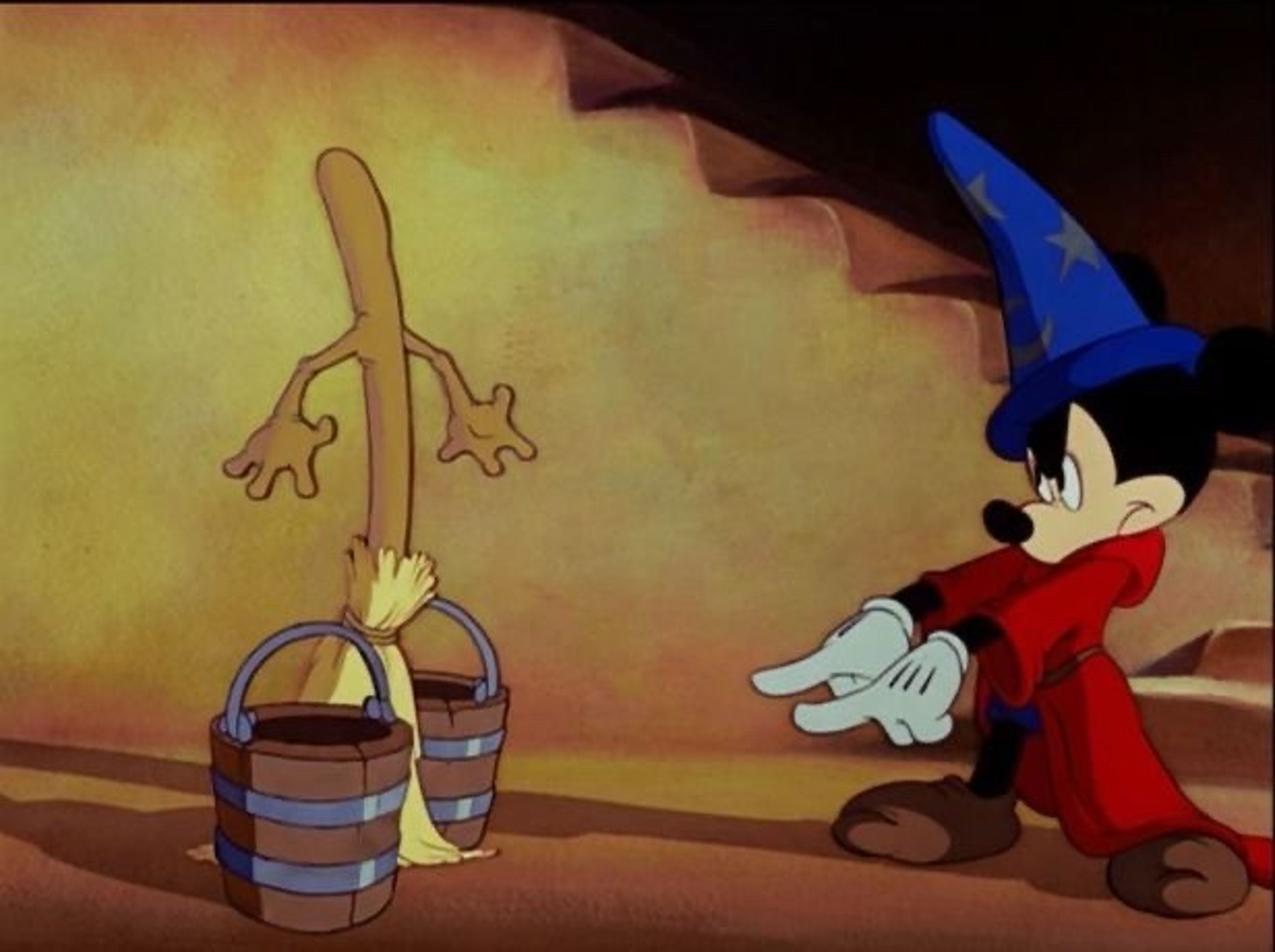
And what happens when we take a break:
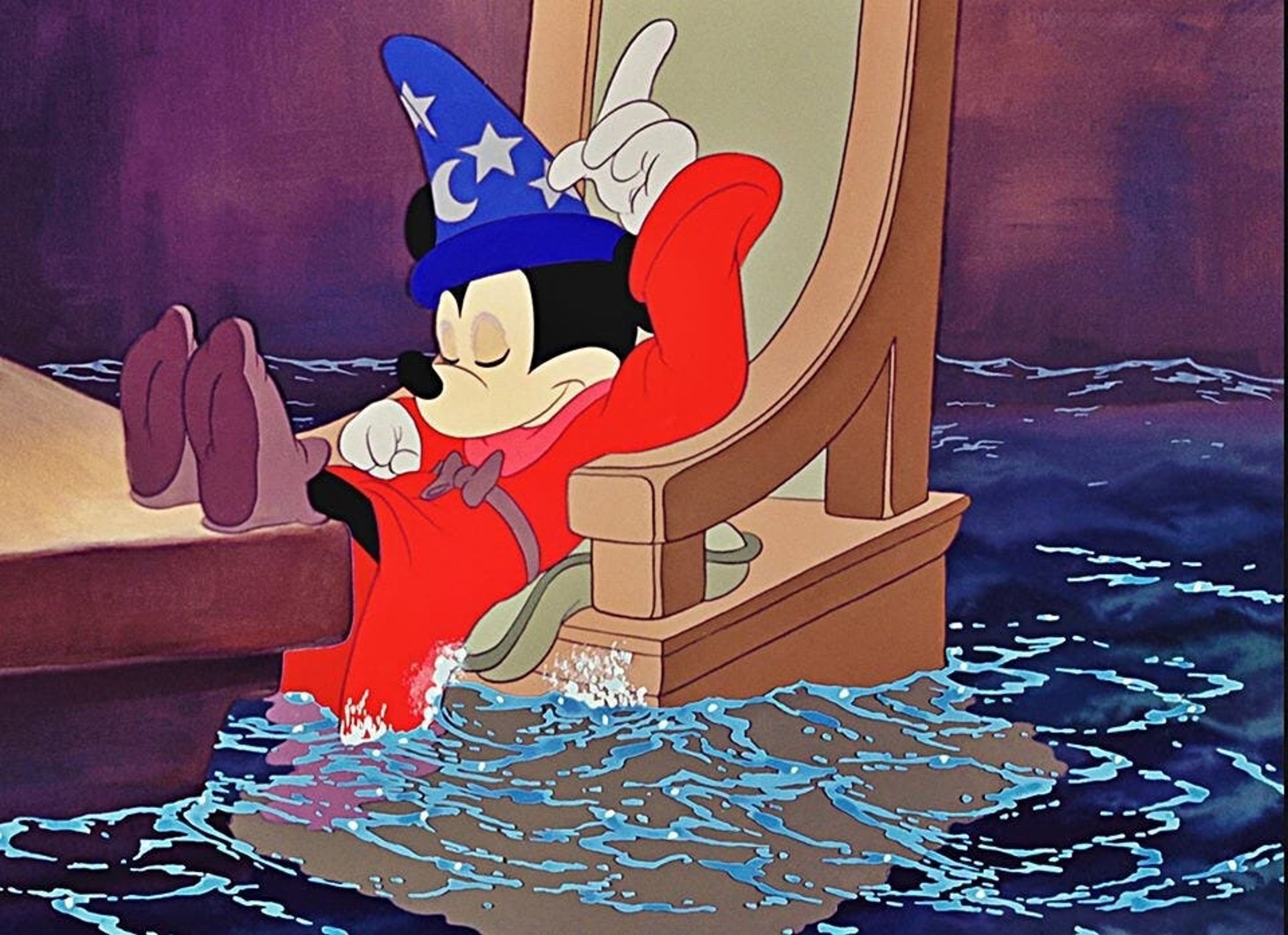
The reality is, there is still a learning curve to these tools. And if you’re not going to put the time and effort into it, it’s going to go haywire quickly.
However, the bar to learning has never been lower, and it has dropped significantly in just two years. Now is the time to get fluent with these tools.
If coding is solved, which anyone who has played with an LLM knows it has, then what’s next?
It seems to me, at least in this moment, what matters now is imagination, great taste, great products that solve interesting problems…not autocomplete tasks. Not bullshit jobs. Not middle managers or TPS reports.
I have talked to many nonprofit leaders over the last year who have it all wrong and are thinking about how they’re going to use AI.
The mindset at the top is: how do I replace my poor performers by implementing AI as quickly as possible?
The problem is the technology, which, while good, isn’t quite good at implementing what you have going just yet. Obviously, there are exceptions, like in the software tech industry.
The better mindset is, how do I use these tools to 10x my top performers? How do I give them the right tools and the time to learn so they can do their job better than they ever could imagine? And when they learn how to do this, the profits follow. Not by cutting costs and employees. But by investing in your best people to do their best work.
If you give a milkshake in a big cup to an eight-year-old that’s half full, someone with a fixed mindset would say, “It’s only halfway full.”
Give them the same amount of milkshake in a smaller cup, and all of a sudden, you have sparked joy.
It’s easy to chalk everything up to growth or to fixed mindsets and to assume everyone needs to adopt a growth mindset. But life is hard. And what I keep getting pulled into is the choice architecture used to deliver the information to change the interaction we are having.
Problems are everywhere.
They are endless. And we need people to solve them.
That didn’t change when humans invented the printing press, electricity, the internet, or AI.
There is always a cost to quitting something.
But the price isn’t so high that you can’t pay it.
The internet makes us think global.
Social media makes us think about status.
The job makes us think in bottom lines.
All these systems floating around to optimize one thing or another.
We don’t think enough about why optimization is the goal for more GDP, more clicks, more money.
Optimizing isn’t where we need to land. It isn’t the destination. And it probably isn’t part of the journey either. At least not as important as we make it out to be.
In the age of AI, it can feel like humans are becoming obsolete. I don’t see it that way. People are miserable with the work that code and LLMs can now handle for us so that we can be free to exercise good judgment, craft a better story, show we have good taste, connect people, change the emotion in the room, be creative, and so on.
What I think this tech does is allow us to have an honest conversation about what work we do matters and what is just bullshit. Unfortunately, for many of us, it’s more than we like to admit.
But not everyone is productive.
The way we use our time is a signal of what we value.
The universe doesn’t conspire against us. It doesn’t try to make us lonely or feel pain. That’s the human condition. We all experience it. The unequal distribution of it can make it feel so much worse. If only we had that one thing…Keeping account of what we are missing in our lives only highlights it and closes our eyes to what we do have.
Is the phenomenon where we hear ideas that contradict our worldview, reject the data and evidence, only to return to what is familiar.
Change is scary. And when the world feels under existential threat, the easy answer is to resist. To hunker down. And wait for a return of what is familiar.
It’s difficult to grow up thinking the world is one way and then find out it’s another. It’s also difficult to see the end of the road. But no matter how much we try to fight gravity, we just can’t.
When we anchor ourselves to our lens in how we see the world, to find clarity, watch it stand still, we can’t be shocked when it moves again. Life is a moving target. Which means if it is insufficient, it can get better too.
Coming up with a solution isn’t the hard part anymore.
Little Cottonwood skiing suffers on powder days, let’s create public transportation that works.
The Great Salt Lake is collapsing, let’s examine how alfalfa farms are using too much water.
Time to draw new district lines, have it done by committee.
We have the solutions. We have the technology. And yet these problems persist. Why?
Coordination is the problem. Incentive structures. Allowing bad behavior. Not evolving with the times.
The blueprints are easy. The step-by-step instructions can be completed in a day. What we find, though, is that what the masses want isn’t what someone with some pull wants to.
The climbing gym I use recently hiked its rates. The problem isn’t the rate itself, but how the rates were justified. Now, a feature that has existed for 2 decades, allowing you to use any gym in their network, has gone away. To retain that privilege, you must now pay an extra $10 per month.
The issue isn’t the money (it’s already expensive). The issue is how your best customers are being treated, not to mention the litany of problems this creates. What if one partner only goes to one gym closer to their home? What if the location you choose doesn’t offer yoga on Wednesdays? What do you do when you’ve climbed all the routes in your grade?
The easiest thing to do is to raise prices. The hard work would be to create and understand the user experience that makes you special. (I’ll also add that the email announcement was clearly not written by a human.) The bottom line: A few will leave, some will upgrade, but everyone is unhappy about the situation. And they are not the only player in town. It’s just so tempting to raise prices and call it a strategy. But when you are not making real decisions and rely on the default/textbook answers, that isn’t real design or leadership.
Good design doesn’t distract us. It creates or changes the emotion in the room. It’s describing a feeling without words.
DammyJay93 breaks it down for us. The results show that a human is still behind the code.
It’s easy to turn the machine on and vibe a product. Garbage in, garbage out. The real work is spending time with the code. Learn it. Test it. Ultimately, it’s about deciding what kind of experience you’re creating for someone.
If you’re not making decisions, you’re not designing.